
House Cladding Cost Melbourne: The 2026 Homeowner’s Price & Planning Guide
- Shane Herring
- 6 days ago
- 12 min read
Most Melbourne homeowners don't realise that their choice of cladding is actually a structural decision, not just a cosmetic one. It's a common frustration to receive three different quotes for the same project and find the prices are worlds apart, leaving you unsure who to trust. You're likely worried about the house cladding cost Melbourne tradies are quoting, especially when you're also trying to manage "four seasons in one day" weather and complex council permit requirements. It's a lot to handle when you just want the job done right.
This guide clears the air on the real-world costs homeowners are seeing in 2026. We'll show you exactly how to budget for both materials and professional installation so you can plan your renovation with genuine confidence. You'll gain a clear understanding of which finishes offer the best durability for our local climate and how to find a local carpenter who values honest communication over flashy sales tactics. It's time to get your project moving with a plan that actually sticks.
Table of Contents
Understanding House Cladding Cost in Melbourne (2026)
Searching for a generic national average for house cladding often leads to disappointment. In 2026, the house cladding cost Melbourne homeowners face is shaped by a unique mix of local labour market shifts, strict Victorian building codes, and our notorious weather patterns. While a basic online calculator might give you a rough figure, it rarely accounts for the reality of working on a 100-year-old Victorian weatherboard or meeting the new 7-star NatHERS energy requirements. Before looking at specific numbers, it helps to understand What is house cladding? and why it serves as the first line of defence for your home. It isn't just a facade; it's a structural layer that must withstand decades of thermal stress.
The real value equation isn't found in the cheapest initial quote. It's found in the material's ability to survive Melbourne's damp winters and scorching summers without warping or rotting. Choosing a material that requires repainting every three years might seem affordable today, but the long-term maintenance costs quickly outpace the price of a premium, durable installation. We've spent over 30 years seeing what works in this city and what fails. A master carpenter looks beyond the surface to ensure the "bones" of your house are ready for the upgrade.
The Melbourne Climate Factor
Melbourne’s "four seasons in one day" isn't just a local joke; it's a structural challenge. Rapid temperature swings cause materials to expand and contract at different rates. If your cladding isn't installed with the correct expansion gaps and moisture management systems, you'll see buckling and water ingress within a few seasons. Cheap materials often fail within five years in local conditions because they cannot handle the high UV exposure followed by sudden, heavy rain. We focus on materials that offer high thermal resistance to keep your home comfortable while protecting the frame from Victoria’s damp winter air.
Structural Integrity and Prep Work
The age of your home dictates the level of preparation required. If you're recladding an older home, the "hidden" costs often lie behind the existing boards. We frequently identify rot or termite damage in the original timber studs that must be rectified before the new cladding is fixed. Slapping a new product over a dodgy frame is a recipe for disaster. For many older Melbourne properties, straightening the frames is a vital step to ensure the final finish looks sharp and professional. A master carpenter ensures the structural integrity of your home is sound, making the cladding a true upgrade rather than a temporary cover-up.
Popular Cladding Materials: Costs vs. Benefits
Choosing the right material is where the house cladding cost Melbourne homeowners plan for really starts to take shape. It is a balance between the upfront investment and the architectural statement you want to make. In 2026, we are seeing a strong shift towards materials that offer both high-end aesthetics and compliance with the latest energy efficiency standards. Your choice will dictate not just the look of your home, but its resilience against the Victorian climate for the next thirty years.
Timber Cladding and Bespoke Feature Walls
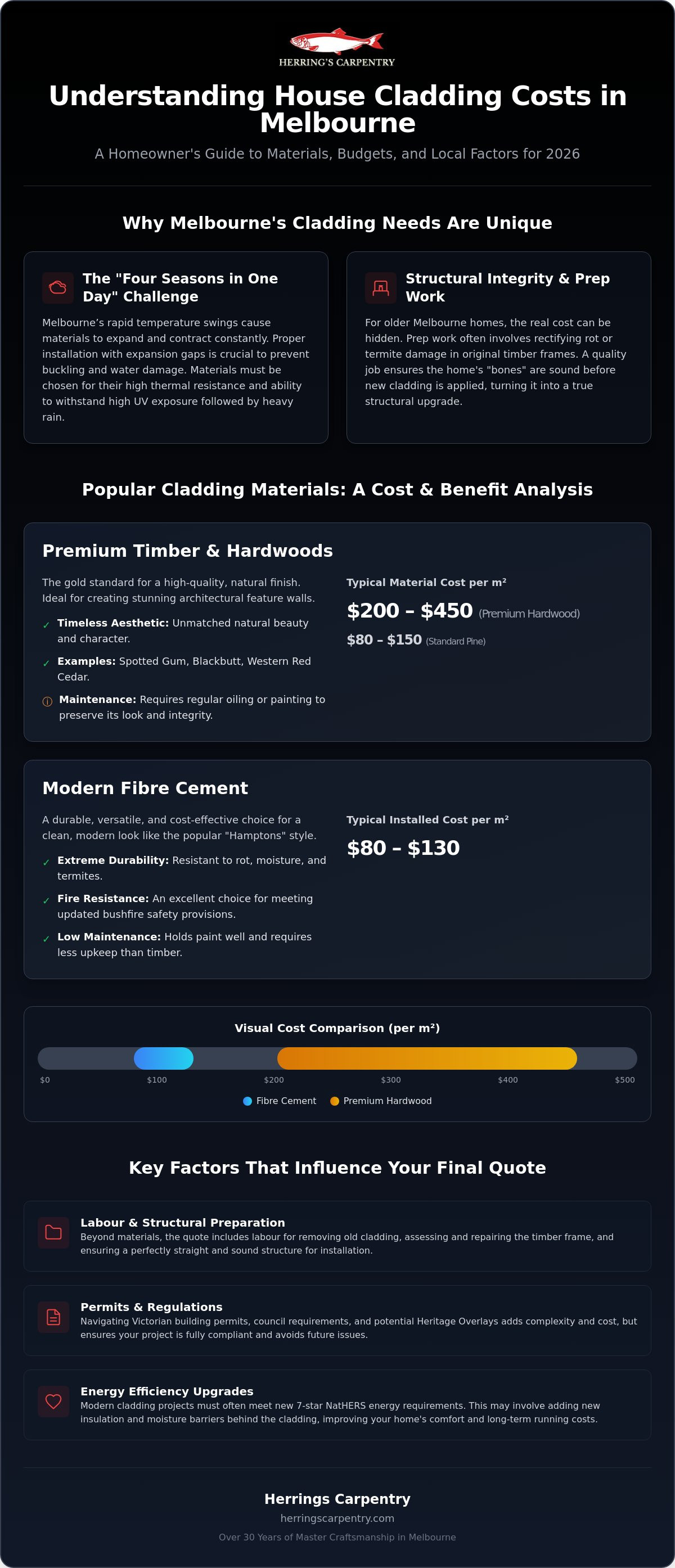
Premium Australian hardwoods like Spotted Gum and Blackbutt remain the gold standard for a high-quality finish. For those looking at timber, standard pine shiplap cladding generally costs between $80 and $150 per square metre for materials. However, for the timeless appeal of premium hardwoods or Western Red Cedar, you should budget between $200 and $450 per square metre. These prices reflect the durability and natural beauty that only real timber provides.
We often suggest using these premium timbers for feature walls rather than the entire house. A well-placed timber feature wall creates a massive architectural impact without the price tag of a full-home hardwood wrap. You also need to consider the ongoing costs of maintenance. Natural oiling preserves the wood's character but requires regular attention; whereas painting offers a different look with longer intervals between coats. If you're looking to elevate your home's facade, consider how cladding and feature walls can transform a plain exterior into a custom architectural statement.
Modern Weatherboards and Fibre Cement
Fibre cement products, such as the popular ranges from James Hardie, are a staple in Melbourne for good reason. They are incredibly durable and offer excellent fire resistance. This is a major factor given the updated bushfire provisions in the NCC 2026. Installation costs for fibre cement typically range from $80 to $130 per square metre. This material is the most cost-effective way to achieve the popular "Hamptons" look that many homeowners in the bayside suburbs are chasing.
When selecting your finish, it is vital to ensure compliance with Victorian cladding regulations, particularly regarding fire safety and moisture management. While vinyl cladding is a cheaper alternative with material costs starting as low as $30 per square metre, it often lacks the structural feel and longevity of fibre cement or timber. Metal cladding, such as aluminium, provides a sleek industrial aesthetic but can vary wildly in price. Extruded aluminium, for instance, can cost between $120 and $280 per square metre. The right choice depends on your budget, your home's style, and how much time you want to spend on maintenance over the next decade.
Breaking Down Your Quote: Labour, Materials, and Logistics
Understanding the house cladding cost Melbourne tradies provide requires looking past the simple price per board. A professional quote is a complex puzzle where material volume is only one piece of the total investment. Many homeowners are surprised to find that labour and logistics often account for a significant portion of the final figure. This is because cladding isn't just a skin; it's a structural barrier that must be integrated perfectly with your home's existing openings and framework. When you see a price that looks too good to be true, it's usually because these essential logistical steps have been overlooked.
You also need to account for material wastage. A standard 10% to 15% wastage factor is typical for most projects, but this climbs quickly if your home has many corners, gables, or complex architectural details. Every cut takes time and every off-cut represents a cost. A master carpenter plans the layout to minimise this waste while ensuring the aesthetic lines remain clean and symmetrical. This level of planning is what separates a high-quality finish from a rushed job that looks messy around the edges.
Professional Carpentry Labour Rates
The gap between a general handyman and a licensed carpenter is found in the details. Precision fitting around window installations and door frames takes time and a sharp eye. If these junctions aren't flashed and sealed correctly, you're looking at water damage and structural rot within a few years. We've spent 30 years refining these techniques to ensure every project meets the National Construction Code (NCC). Paying for experience means you aren't paying for someone else's mistakes later down the track. Professional rates reflect the insurance, licensing, and specialised tools required to get the job done right the first time.
Site Logistics and Scaffolding
Hidden costs often lurk in the logistics of a Melbourne site. If you live in a multi-storey home, scaffolding is a non-negotiable safety requirement that adds to the daily running cost. Then there's the issue of site access. In tight inner-city suburbs like Richmond or Fitzroy, simply getting materials to the back of the house can be a logistical headache that increases labour hours. Waste removal is another major factor. If your old boards contain asbestos or lead-based paint, they require specialist disposal. These aren't areas where you want a contractor to cut corners, as the legal and health risks of improper disposal far outweigh any small saving. A transparent quote will always break these items down clearly so there are no surprises halfway through the build.
Permits, Regulations, and ROI for Melbourne Homeowners
The administrative side of a renovation is often where the house cladding cost Melbourne homeowners plan for grows unexpectedly. In Victoria, any structural change or significant replacement of external materials usually requires a building permit. For building work costing more than $10,000, a state government levy of $1.28 per $1,000 of the project value applies. When you factor in private building surveyor fees and council lodgements, total permit costs typically range from $3,000 to $8,000. Skipping this step is a massive risk. Unpermitted work can lead to heavy fines, issues with your home insurance, and significant hurdles when you eventually try to sell the property.
It is also vital to stay updated on the shifting regulatory landscape. As of mid-2026, Cladding Safety Victoria (CSV) has been wound down, with its functions transferred to the new Building and Plumbing Commission (BPC). This new body provides integrated oversight to ensure all replacement materials meet the latest safety standards. We make it a priority to ensure every project we take on is fully compliant with these evolving Victorian standards, protecting both your family and your investment.
Council Permits and Heritage Zones
If you live in established areas like Boroondara, Yarra, or Port Phillip, your home may be subject to a Heritage Overlay. These councils are strict about maintaining the character of the streetscape. You cannot simply pick a modern profile and hope for the best; you often need to match the existing timber profiles or colour palettes exactly. We have decades of experience navigating these local requirements, ensuring that your new cladding respects the history of the suburb while providing modern protection. Matching a bespoke Victorian weatherboard profile requires a master carpenter's eye for detail, rather than a "one size fits all" approach.
Boosting Energy Efficiency and Value
The National Construction Code (NCC) 2026 now enforces a minimum 7-star NatHERS rating for major renovations. Quality cladding is one of the most effective ways to meet these energy efficiency standards. By choosing materials with high thermal mass or integrating high-quality sarking and insulation during the install, you significantly improve your home's R-value. This doesn't just lower your energy bills; it makes the home more comfortable during those biting Melbourne winters. Many homeowners choose to bundle this work with other exterior upgrades, such as skylights, to completely refresh the home's light and thermal performance.
From a resale perspective, the return on investment for a cladding upgrade is strong. General renovation data for 2026 suggests that a well-executed facade update can recover 80% to 120% of its cost in an improved sale price. Street appeal is the first thing a buyer sees, and a home that looks structurally sound and modernised will always command a premium in the Melbourne market. If you are ready to discuss the specific requirements for your property, contact us for a straightforward assessment of your cladding needs.
Choosing the Right Melbourne Carpenter for Your Project
When you are weighing up the house cladding cost Melbourne contractors have quoted, it's easy to focus solely on the bottom line. However, the cheapest price often comes from a generalist who lacks the specific expertise needed for complex exterior work. A specialist in external cladding understands that this isn't just a "finish" but a critical structural layer. They know how to integrate the cladding with your home's existing vapour barriers and thermal breaks to prevent the moisture issues common in Victoria's damp winters. This specialised knowledge is what ensures your investment actually protects your home for the long haul.
Before you sign a contract, ask the tough questions. Does the carpenter have specific experience with your chosen material, whether it's premium Australian hardwood or modern fibre cement? Are they up to speed with the 2026 National Construction Code updates? A reliable professional will be transparent about their process, from how they manage site waste to how they handle the straightening of old frames. If a tradie can't explain the "why" behind their installation method, they likely aren't the right fit for a project that needs to last thirty years. Precision matters when the weather is this unpredictable.
The Herrings Carpentry Standard
We've spent over 30 years working on Melbourne homes, from heritage cottages to modern extensions. Our approach is built on the belief that a project is only as good as the "bones" underneath. This is why we prioritise structural framing for extensions before the first board is even cut. We don't cut corners on the prep work because we know that a perfectly straight frame is the only way to achieve a high-end architectural finish. You can expect a clean site, respectful communication, and a result that stands up to our local climate. We value the integrity of the final product over flashy marketing tactics.
Your Next Steps
Getting an accurate, no-nonsense quote starts with a thorough site visit. It's helpful to have a clear idea of the aesthetic you're chasing, whether that's a full timber wrap or a strategic feature wall to boost curb appeal. We recommend looking at local projects in your suburb to see how different materials age in our specific climate. This helps you visualise the outcome before the work begins. When you're ready to move from planning to action, you can organise a consultation with Shane and the team. We'll provide a transparent breakdown of what's required to get your home looking its best, focusing on durability and honest craftsmanship.
Ready to Transform Your Home’s Facade?
Cladding your home is a significant investment that goes far beyond simple street appeal. It is about protecting your property’s structural integrity against our unpredictable weather and ensuring you meet the latest 7-star energy standards. By now, you should have a clearer picture of the house cladding cost Melbourne homeowners face in 2026 and why the "cheapest" quote often hides expensive shortcuts in prep work or material quality. A successful project relies on balancing the upfront price with the long-term durability of the finish.
Getting the job done right requires a partner who understands the local landscape. Herrings Carpentry is a family-owned and operated business with over 30 years of Master Carpentry experience. We are specialists in custom timber finishes and structural framing for extensions, ensuring your home isn't just beautiful, but built to last. If you want a transparent process without the flashy sales talk, Get a straightforward, expert cladding quote from Herrings Carpentry. We are ready to help you navigate the permits and material choices so you can move forward with your renovation with total confidence. Your home deserves a finish that stands the test of time.
Frequently Asked Questions
Is cladding cheaper than rendering a house in Melbourne?
Cladding often carries a higher upfront cost than rendering, but it provides a more significant structural upgrade. While render is a cosmetic finish, quality cladding improves your home's thermal performance and energy efficiency. In the long run, the house cladding cost Melbourne homeowners invest is often recouped through lower energy bills and reduced maintenance compared to render, which can crack as the house settles.
Does house cladding require a building permit in Victoria?
Yes, most cladding projects in Victoria require a building permit. This is essential because replacing the external skin of a building affects fire safety and moisture management standards. For any building work valued at more than $10,000, a state government levy must also be paid. It's best to consult with a registered building surveyor early to ensure your project meets all Victorian Building Authority requirements.
What is the most durable cladding material for Melbourne weather?
Fibre cement and premium Australian hardwoods like Spotted Gum are the most durable options for our volatile climate. These materials are engineered or naturally suited to handle rapid temperature shifts without warping. Fibre cement is particularly resilient against moisture during damp winters, while hardwoods offer a high-end finish that, when maintained, can withstand the harsh UV rays of a Victorian summer for decades.
How long does it take to clad a standard three-bedroom home?
A typical single-storey, three-bedroom home usually takes between two and four weeks to complete. This timeline includes the removal of old materials, necessary repairs to the timber frame, and the precise installation of the new boards. Projects involving multi-storey scaffolding or complex architectural details like gables will naturally take longer. We focus on a methodical pace to ensure every flashing and seal is watertight.
Can I install new cladding over my existing weatherboards?
Installing new cladding directly over old boards is possible but rarely recommended. This approach often creates issues with window and door flashings and makes it impossible to inspect the frame for rot or termite damage. We prefer to strip the old material back so we can install modern sarking and insulation. This ensures the structural "bones" of your home are sound before the new finish goes on.
How much does timber cladding cost per square metre in 2026?
In 2026, material costs for timber cladding depend heavily on the wood species you choose. Standard pine shiplap generally ranges from $80 to $150 per square metre. If you're looking for premium Australian hardwoods or Western Red Cedar, you should budget between $200 and $450 per square metre. When calculating the total house cladding cost Melbourne project rates, remember to factor in labour, scaffolding, and waste disposal fees.
What is a heritage overlay, and how does it affect my cladding choice?
A heritage overlay is a planning control used by local councils to preserve the historical character of established suburbs. If your property is under an overlay, you'll likely need council approval for any external changes. This usually requires you to match the original material and profile of the house. We have extensive experience working with councils like Boroondara and Yarra to ensure your renovation respects these strict heritage guidelines.
How do I maintain my timber cladding so it doesn’t fade?
Maintaining the natural colour of timber requires regular oiling every 18 to 36 months, depending on how much sun the walls receive. Using a high-quality, UV-blocking timber oil prevents the wood from silvering and keeps it supple. If you're looking for a lower-maintenance finish, a premium exterior paint provides a durable barrier against the elements. Regular inspections ensure that any small issues are caught before they become expensive structural problems.


Comments