
Timber Feature Wall Installation Melbourne: Expert Craftsmanship for Your Home
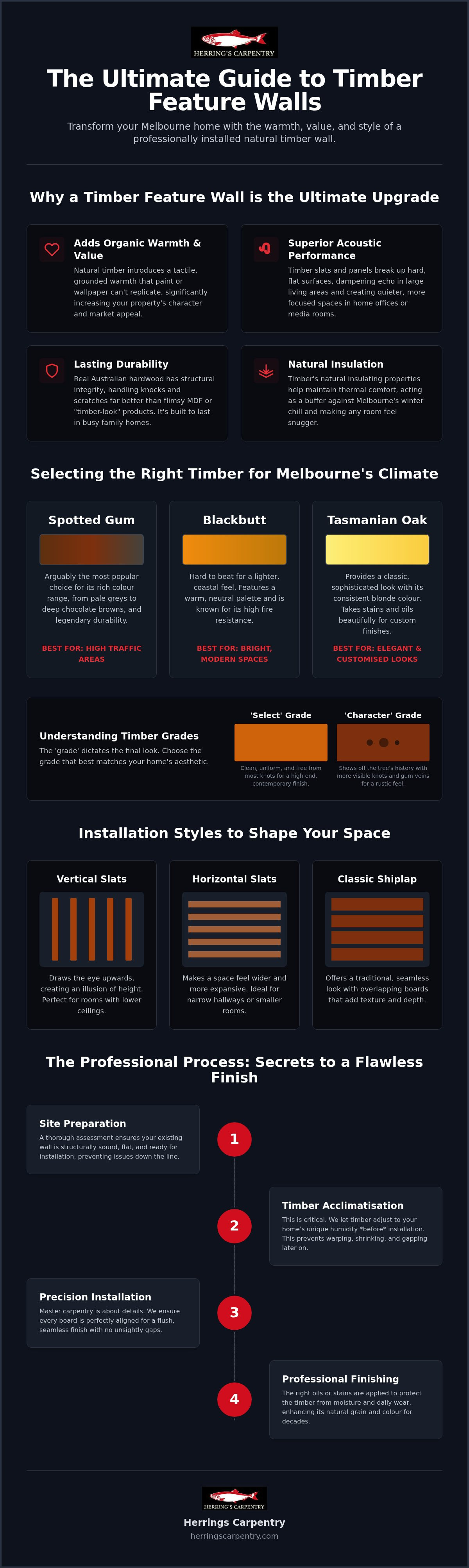
A timber feature wall is far more than just a decorative choice; it's a structural architectural element that requires the precision of a master carpenter to stand the test of time. You've likely seen the stunning impact of natural wood in a modern living room or bedroom, but you might also worry about Melbourne's unpredictable moisture causing the boards to warp or shrink. It's a valid concern. Finding a builder who actually turns up and understands how different species react to your home's unique light shouldn't be part of the struggle.
By choosing a professional timber feature wall installation Melbourne residents can rely on, you're ensuring your home gets a feature that stays straight, durable, and beautiful for decades. You'll discover how the right craftsmanship can turn a simple wall into a tactile masterpiece while keeping the entire process hassle-free. We will look at selecting the perfect Australian hardwoods for your space, the technical secrets to a flush finish, and how to integrate these features seamlessly with your existing cabinetry and layout.
Table of Contents
Why a Timber Feature Wall is the Ultimate Melbourne Home Upgrade
Melbourne homes often feel a bit sterile with nothing but white plaster and cold tiles. A timber feature wall changes that instantly. It brings an organic warmth that paint or wallpaper simply can't replicate. When you walk into a room with a well-installed timber wall, the atmosphere shifts. It's tactile. It's grounded. In a competitive market like Melbourne, these architectural details make a property stand out during an inspection. Buyers recognise quality. A professional timber feature wall installation Melbourne homeowners choose isn't just a cosmetic fix; it's a long-term investment in the home's character.
Beyond the visual appeal, timber is a sensible choice for our local climate. Many older Victorian homes struggle with temperature control throughout the year. Timber has natural insulating properties that help maintain thermal comfort. It acts as a subtle buffer against the winter chill, making a room feel snugger. Whether you're planning a modern open-plan extension or a traditional renovation, timber fits the bill. It bridges the gap between heritage charm and contemporary clean lines without looking out of place.
Acoustic Benefits for Modern Living
Modern Melbourne builds often feature large, tiled living areas. These spaces can easily become echo chambers, making conversation or watching the footy difficult. Timber slats or panels help dampen this echo by breaking up flat, hard surfaces. In a home office, this sound absorption creates a much-needed quiet nook for focus. Media rooms also benefit significantly. Timber provides a much better acoustic profile than flat plasterboard, giving you a richer sound experience without the bounce.
Durability vs. Decorative Alternatives
It's tempting to look at cheap MDF or "timber-look" products, but they don't hold up in high-traffic zones. Real timber has structural integrity. It handles the occasional knock or scratch from kids and pets far better than a flimsy composite board. If a scratch does happen, real wood is forgiving. You can use various wood finishing techniques to restore its original look or even change the stain later on. A professional installation ensures the wall is resilient against the daily wear of a busy family hallway. You aren't just decorating; you're building something that lasts.
Selecting the Right Timber: Species, Colours, and Grades
Picking the right timber isn't just about what looks good in a showroom. Melbourne's weather is famously fickle. One day it's dry and scorching, the next it's damp and cold. Timber is a living material that responds to these changes by expanding and contracting. Choosing a species with a low movement value is critical for a timber feature wall installation Melbourne families expect to stay flush and gap-free. While Australian hardwoods cost more upfront than imported softwoods, their density means they won't dent as easily when the vacuum cleaner inevitably bangs into them. They are the reliable workhorses of the carpentry world.
The grade of timber you select also dictates the final look of your room. 'Select' grade is exactly what it sounds like: clean, uniform, and free from most natural knots or gum veins. It's the go-to for a high-end, contemporary finish. If you prefer a bit of 'story' in your wood, 'Standard' or 'Character' grades show off the tree's history with more visible features. This works particularly well if you want to match your interior to your Melbourne external cladding, creating a seamless flow from the front porch into the hallway. It’s about creating a cohesive look that feels like it was planned from the start, not tacked on later.
Popular Australian Hardwoods for Feature Walls
Spotted Gum is arguably the most popular choice for its rich, oily finish and incredible colour range, moving from pale greys to deep chocolate browns. Its durability is legendary. For a lighter, coastal feel, Blackbutt is hard to beat with its warm, neutral palette and high fire resistance. If you want something consistent and blonde, Tasmanian Oak provides a classic, sophisticated look. It offers an unbeatable smoothness that takes stains and oils beautifully, allowing you to customise the final hue to suit your furniture.
Sustainable and Recycled Options
Recycled timber isn't just about the 'reclaimed' aesthetic. It's about stability. Because these boards have already spent decades seasoning in the elements, they've done all the shrinking they're ever going to do. This makes them exceptionally reliable for interior walls. For those who want new timber but care about the environmental footprint, FSC-certified options ensure your feature wall is sourced responsibly. Finding the right balance between sustainability and structural quality is where a master carpenter Melbourne specialist becomes invaluable. We help you source materials that aren't just green, but also fit for purpose.
If you're unsure which species will hold up best in your specific room, it's worth asking a professional for a straight answer on what works best for your home's light and layout.
Popular Installation Styles: From Modern Slats to Classic Shiplap
Choosing the right style is where the design meets the trade. A timber feature wall installation Melbourne homeowners often request is the vertical orientation. It draws the eye upward, making standard 2.4m ceilings feel much more spacious. Conversely, horizontal boards can stretch a room, making a cramped hallway feel grander. It's about more than just aesthetics. It's about manipulating the proportions of your living space to work better for you. We see many people choosing horizontal layouts for media rooms to create a cinematic, wide-screen feel, while vertical layouts remain the favourite for entryways and stairwells.
Integrating hidden doors or shelving directly into the timber is where true craftsmanship shines. We can build "jib" doors that disappear into the pattern of the wall, allowing you to hide a pantry or a storage cupboard without breaking the visual flow. This isn't just about sticking boards on a wall. It's about custom cabinetry and storage solutions that are built into the very fabric of your room. These features require a level of precision that off-the-shelf panels just can't offer, ensuring every gap is consistent and every edge is flush.
Vertical Slat Walls (Battens)
These have exploded in popularity across Melbourne's inner suburbs. They create a rhythmic, architectural look using depth and shadow. We typically play with spacing depending on the room size. Tight spacing of 5mm to 10mm feels dense and premium, while wider gaps of 20mm or more feel open and airy. If you really want to show off the texture of the wood, install some grazing LED strips. The shadows cast by the battens create a dramatic, high-end feel that changes throughout the day as the sun moves across your home. It’s a simple way to add massive architectural interest without a massive renovation.
Shiplap and Tongue-and-Groove
For those who prefer a solid, uninterrupted surface, shiplap is the classic choice. It provides a clean, textured appearance that feels incredibly permanent. The V-joint profile is a particular favourite because it works in almost any setting. It has enough detail to feel traditional in a weatherboard cottage, but it's sharp enough for a modern build. This level of precision joinery is especially important in carpenter for house extension Melbourne projects, where the new feature wall needs to tie in perfectly with the existing structural framing. Every joint must be tight, and every line must be dead straight to ensure the finish doesn't look like an afterthought.
The Professional Installation Process: Why Precision Matters
A professional timber feature wall installation Melbourne residents invest in relies on much more than just the quality of the wood. The real secret is in the preparation. Before a single board is cut, we assess the substrate. Whether it's plasterboard over a timber frame or a solid brick wall, the surface must be dry, level, and structurally sound. If the base wall is bowed or uneven, the timber will follow that curve, leading to unsightly gaps and uneven shadows. We take the time to shim and level the surface first, ensuring the finished feature is dead straight and stays that way.
Acclimatisation is another step many people skip. Timber is a natural material that reacts to the moisture in your home. We bring the timber onto the site days before the installation begins, allowing it to settle into your specific environment. This simple process prevents the boards from shrinking or warping once they're fixed. For the fixing itself, we use a combination of high-strength structural adhesives and secret-nailing. By driving nails through the tongue of the board at an angle, the fastener is hidden by the next piece. The result is a clean, fastener-free finish that lets the natural grain do the talking.
Fixing to Different Wall Types
The approach changes depending on what's behind the plaster. For standard timber-framed walls, we locate the studs to ensure a rock-solid fix. If we're working with masonry or brick, we often install timber furring strips first. This creates a perfectly flat plane and provides a secure base for the feature boards. We also handle the tricky bits, like managing electrical outlets or preparing for a wall-mounted TV. By planning the layout around your technology, we can hide cables and ensure the mounting brackets are anchored into the structural frame, not just the decorative timber.
The Finishing Touches
Once the boards are up, the final sanding and oiling bring the project to life. You'll need to choose between matte, satin, or gloss finishes. Matte and satin are popular for their natural, understated look, while gloss can add a bit of drama. We use high-quality oils and waxes that penetrate the wood, protecting it from the inside out. This prevents the timber from silvering or fading over time. When the job is done, we don't just pack up and leave. Our no-nonsense approach means a thorough clean-up and a final walkthrough to ensure you're happy with every joint.
If you're ready to add a touch of master craftsmanship to your home, book a consultation with Herrings Carpentry to discuss your project.
Transforming Your Space with Herrings Carpentry
Choosing a tradesperson to work inside your home is a significant decision. It's about more than just the final product; it's about the reliability of the person holding the tools. Shane Herring brings over 30 years of experience to every project. This isn't just about technical skill. It's about knowing how different timber species behave across various Melbourne suburbs, from the humid Bayside to the drier northern corridors. When you choose us for your timber feature wall installation Melbourne, you're getting three decades of refined local knowledge and a commitment to getting the job done right the first time.
We believe in honest, straightforward communication. You won't deal with a middleman or a pushy salesperson. You'll get a clear, no-nonsense quote that reflects the real work involved. If your feature wall is part of a larger renovation, we coordinate directly with your other trades. We talk to the sparkies about cable placement and the plasterers about substrate readiness. This level of organisation ensures the project moves forward without the typical headaches or delays that plague many home improvements. We take pride in a clean site and a handover that leaves you with nothing to do but enjoy the new look of your room.
Custom Carpentry Beyond the Wall
A feature wall often serves as the anchor for a larger design vision. We can integrate custom cabinetry or built-in bench seating that uses the same timber species for a perfectly cohesive look. Our expertise isn't limited to the indoors, either. Many homeowners choose to match their interior features with a deck and pergola package Melbourne families use to create seamless indoor-outdoor flow. Having a licensed builder oversee these details ensures that every element, from the structural framing to the decorative finish, meets a high standard of integrity.
Our Local Melbourne Service Area
Herrings Carpentry is a family-owned business, and we've built our reputation by looking after our neighbours. We cover all Melbourne suburbs, providing consistent service from the Bayside area through to the North and West. Being local means we're accountable. We don't disappear once the last nail is driven. You have direct access to Shane for any advice or project management needs throughout the build. If you're ready to see how a professionally installed timber feature can change your home, the next step is a simple site visit. We'll look at your space, discuss timber options, and provide a straightforward plan to bring your vision to life.
Ready to Build a Lasting Architectural Feature in Your Home?
A high-quality timber feature wall is one of the most effective ways to add tactile luxury and warmth to your living space. The success of the project relies on selecting the right species for our local climate and ensuring the substrate is perfectly prepared. Whether you prefer the modern look of vertical battens or the timeless feel of shiplap, the difference lies in the details. Precision joinery and proper moisture management are what separate a DIY attempt from a professional timber feature wall installation Melbourne homeowners can be proud of for decades.
With over 30 years of local carpentry experience, Herrings Carpentry brings a no-nonsense approach to every build. We are a family-owned and operated business specialising in high-end timber finishes that stand the test of time. We take pride in our honest communication and our commitment to getting the job done right without the usual renovation stress. Get a straightforward quote for your Melbourne feature wall from Shane Herring today. we look forward to helping you transform your home with the natural beauty of master-crafted timber.
Frequently Asked Questions
How much does a timber feature wall cost to install in Melbourne?
The cost of a timber feature wall installation Melbourne homeowners choose depends on the timber species, the size of the wall, and the complexity of the pattern. Premium Australian hardwoods like Spotted Gum will sit at a higher price point than sustainable softwoods. We provide straightforward quotes based on the specific requirements of your room and the level of joinery needed to achieve a flush finish.
Can I install a timber feature wall over existing plasterboard?
You can certainly install timber boards over existing plasterboard, but we don't simply glue them to the surface. For a secure and straight finish, we ensure the fixings reach the structural timber studs behind the plaster. If the existing wall is significantly out of level, we may install a thin timber batten system first to create a perfectly flat plane for the new feature boards.
Which timber species is best for a feature wall in a humid room like a bathroom?
For bathrooms or laundries, it's best to use timber species with high natural durability and low movement, such as Spotted Gum or Australian Red Cedar. These species handle moisture better than others. It is also critical to seal every side of the board before installation to prevent the timber from absorbing steam and warping over time.
How long does a typical timber feature wall installation take?
Most standard interior feature walls are completed within one to two days. This includes the site preparation, the actual installation of the timber, and the application of the final oils or waxes. Larger projects involving integrated cabinetry or hidden doors will take longer. We always give you a clear timeline before we start so you know exactly when your room will be back in action.
Do I need to oil or stain my timber feature wall regularly?
Internal feature walls require far less maintenance than outdoor decks because they aren't exposed to sun and rain. In most Melbourne homes, a light re-oiling every few years is enough to keep the colour rich and the grain looking sharp. If the wall is in a high-sun area near a large window, you might notice the colour mellowing over time, which many homeowners actually prefer.
Can you mount a heavy TV or artwork onto a timber slat wall?
You can mount heavy items like TVs or large mirrors, provided the mounting brackets are anchored into the wall studs through the timber slats. We recommend planning your TV placement before the installation begins. This allows us to reinforce the specific area and hide all the cabling behind the timber for a clean, professional look.
Is a timber feature wall suitable for an outdoor alfresco area in Melbourne?
Timber features are a great choice for alfresco areas, but they require exterior-grade materials and more robust finishes. We use different fixing techniques for outdoor walls to allow for the greater expansion and contraction caused by Melbourne's weather. It's important to choose a species that's rated for external use to ensure it doesn't rot or lose its structural integrity.
What is the difference between cladding and a feature wall?
The difference is mainly about purpose and location. Cladding is typically the protective exterior skin of a building designed to keep the weather out. A feature wall is a decorative interior element used to add texture and style to a room. While we use similar carpentry skills for both, the materials and the way they are fixed to the structure change depending on whether they are inside or out.


Comments