
Outdoor Privacy Screen Ideas: Enhancing Your Melbourne Backyard
- Shane Herring
- Jul 31
- 12 min read
Your backyard privacy screen shouldn't look like a panicked after-thought designed just to hide the neighbour's second-storey window. Most Melbourne homeowners know the frustration of a beautiful deck that feels like a fishbowl or a boundary fence that has seen better days. It's tough to truly relax when you are exposed to the wind or feel like you are on display for the whole street. Finding the right outdoor privacy screen ideas is about more than just blocking a view; it's about turning an exposed area into a quiet, functional sanctuary.
We believe a screen should be a structural extension of your home's architecture, not a flimsy DIY panel that warps after one Victorian summer. This guide provides professional design inspiration and honest material advice to help you create a secluded retreat that stands the test of time. You'll learn how to navigate ResCode transparency rules while choosing durable timbers like Merbau or Spotted Gum. We will show you how a well-built screen can increase your property value and finally give you the backyard peace you deserve.
Table of Contents
Why Privacy Screens are Essential for Melbourne Outdoor Living
Melbourne's suburbs are getting tighter. If you live in a newer development or a subdivided block, you probably know the "goldfish bowl" feeling. It's that nagging sense that the neighbours are watching you flip burgers or read a book. Privacy screens are the most practical solution for these close-settlement areas. They do more than just block eyes; they create a defined boundary that makes a small yard feel like a private room.
We also have to deal with the weather. A gusty Melbourne afternoon can ruin a BBQ. A solid or semi-transparent screen acts as a windbreak, making your outdoor area usable for more months of the year. During summer, the right outdoor privacy screen ideas also provide thermal comfort. By blocking the harsh western sun, you keep your deck cooler and protect your furniture from UV damage. It serves as a textured backdrop that makes your outdoor furniture pop, giving the entire space a finished, professional look.
Solving the Nosy Neighbour Problem
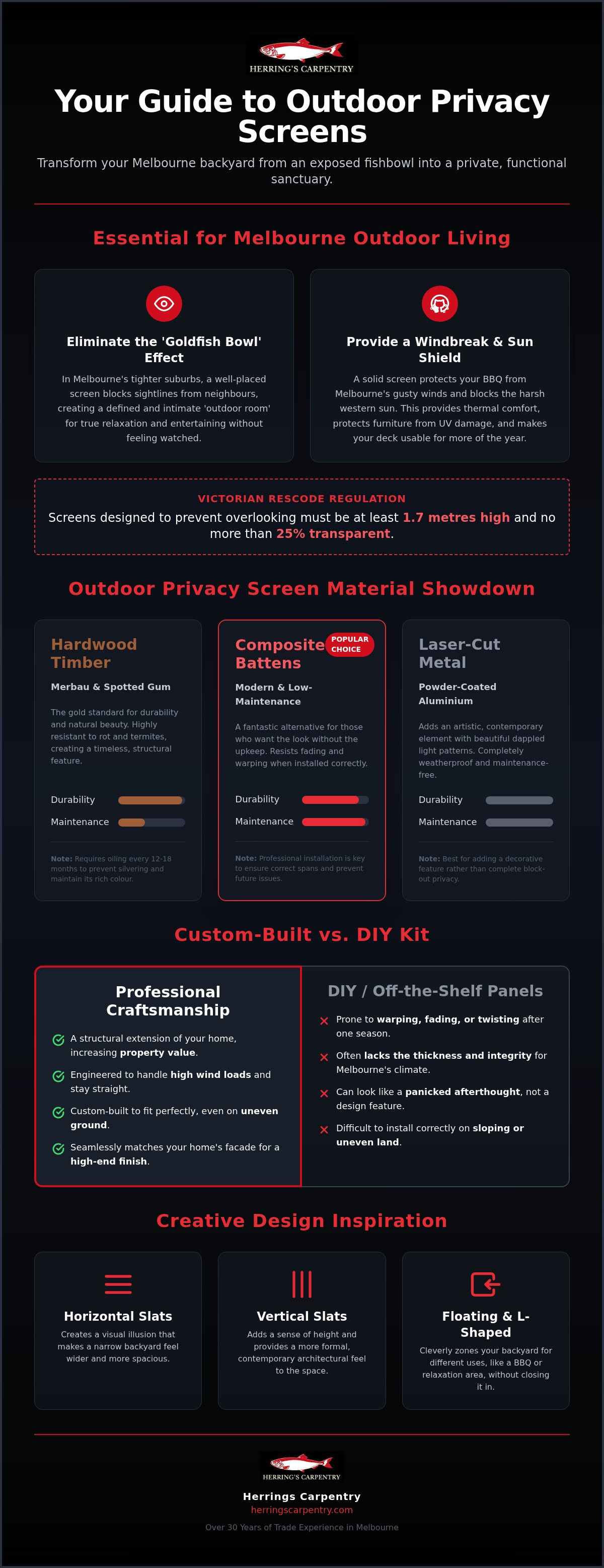
Strategic placement is everything. You don't always need a wall around the entire perimeter; often, a well-positioned screen can block the specific sightlines from a neighbour's second-storey window. Under Victorian ResCode regulations, screens designed to prevent overlooking must be at least 1.7 metres high and no more than 25% transparent. We focus on balancing these rules with airflow. You want privacy, but you don't want a stifling backyard that traps heat. A custom-built screen allows for precision spacing between slats to keep the breeze moving while keeping prying eyes out. This creates an intimate "outdoor room" perfect for entertaining without the feeling of being watched.
Increasing Property Value with Quality Carpentry
A flimsy, store-bought panel from a hardware chain often warps or fades after one season. Melbourne homebuyers recognise quality when they see it. A structural feature wall built from Merbau or Australian hardwoods looks like it belongs to the house. It's an investment in your home's "bones." We ensure every screen matches your existing house facade or decking, creating a seamless transition. This level of craftsmanship turns a basic boundary into a high-end architectural feature. It's a major selling point in the local real estate market because it suggests the property has been maintained with a focus on durability and style. Choosing a professional build over a DIY kit ensures the structure stays straight and true, even in the face of high wind loads.
Top Material Ideas for Your Custom Privacy Screen
Choosing the right material is the difference between a screen that lasts thirty years and one that needs replacing after two. In Melbourne, we deal with intense UV exposure and sudden temperature shifts. This environment is brutal on cheap materials. When exploring outdoor privacy screen ideas, you need to look for structural integrity first and aesthetics second. Retail panels might look fine in the store, but they often lack the thickness required to stay straight under the Victorian sun.
Merbau and Spotted Gum: These are the gold standards for local projects. Merbau is naturally oily and highly resistant to rot and termites. Spotted Gum is an Australian favourite for its durability and stunning colour variations that range from light brown to deep chocolate.
Composite Battens: If you don't want to spend your weekends oiling timber, high-quality composite is a great alternative. It handles the sun well without fading or warping, provided it is installed with the correct spans.
Laser-Cut Metal: Powder-coated aluminium panels can add an artistic element. They create beautiful dappled light patterns while remaining completely weatherproof and maintenance-free.
The Beauty of Australian Timber
Selecting a timber species depends on your existing deck and the level of maintenance you are comfortable with. Hardwoods like Merbau are incredibly stable. We often recommend horizontal slats to make a narrow backyard feel wider. Vertical slats, on the other hand, can add height and a more formal architectural feel. To keep that professional finish, you'll need to apply a high-quality timber oil every 12 to 18 months. This prevents the wood from silvering off and keeps the grain looking rich. If you aren't sure which timber suits your specific micro-climate, asking a local carpenter can save you a lot of guesswork and wasted money.
Modern Cladding and Feature Walls
For a more solid, contemporary feel, you might consider external cladding Melbourne homeowners often use for new builds. Architectural panels can be installed with shadow-line gaps to create depth. This technique adds a level of sophistication that simple slats can't match. We often combine these solid walls with matte black aluminium frames for an industrial-chic look. This mix of materials is popular because it breaks up the visual weight of a large screen, making it feel like a deliberate design choice rather than just a tall fence. It's about building a structure that complements your home's architecture while providing total seclusion from the street.
Custom-Built vs. DIY: Why Professional Craftsmanship Wins
It's tempting to grab a few pre-made panels from the local hardware store and spend a Saturday afternoon trying to bolt them to your fence. However, there is a significant gap between a temporary fix and a permanent structural addition. When you research outdoor privacy screen ideas, the focus should be on how that screen will look in five years, not just five hours. A custom-built screen is designed to handle the specific wind loads of your property. A DIY kit can easily become a sail during a winter storm, putting immense pressure on your existing posts or boundary fence.
Shane Herring has spent over 30 years building across Melbourne residential blocks. That experience means knowing exactly how deep a footing needs to be and which fixings won't rust or snap in our coastal air. Professional craftsmanship ensures the lines are perfectly straight, even if your ground is sloped or your house isn't perfectly square. We don't just make it fit; we build it to belong to the architecture of your home.
The Hidden Risks of Flimsy DIY Kits
The most common issue with off-the-shelf kits is the "DIY regret" that sets in after the first summer. Cheap, thin timber slats or lightweight plastic panels often sag and warp when exposed to direct sunlight. These kits usually rely on inadequate mounting points that can't support the weight of the structure over time. A screen is only as good as its foundation. If the footings are too shallow or the timber isn't graded for structural use, the whole thing will eventually lean or rattle in the breeze. Investing in a professional build means you won't be pulling it down and starting again in two years.
Bespoke Design Integration
A custom screen shouldn't look like an afterthought tacked onto a wall. We specialise in tying these features into our deck and pergola packages Melbourne homeowners use to transform their entire outdoor living space. This integrated approach allows us to use matching timber species and hidden screw systems for a premium finish. Unlike store-bought panels that come in fixed sizes, we build to the millimetre. This means no awkward gaps at the edges and no "stepped" look on uneven terrain. We sand every edge and ensure every joint is flush, providing a level of detail that turns a simple privacy barrier into a piece of high-end carpentry.
Creative Design Ideas for Different Outdoor Spaces
Every Melbourne backyard has its own set of challenges. A design that works for a sprawling deck in Berwick won't necessarily suit a compact courtyard in Richmond. When you are looking for outdoor privacy screen ideas, you need to think about how the structure interacts with your existing space. It's about more than just blocking a view; it's about defining how you use your home. A well-placed screen can turn a drafty, exposed corner into a cosy nook where you actually want to spend time.
The Floating Screen: This is a great way to block a specific sightline, like a neighbour’s second-storey window, without boxing in your entire yard. By mounting the screen slightly away from the boundary, you maintain a sense of depth and airflow.
L-Shaped Corners: Use these to create a dedicated zone for your BBQ or a lounge area. It provides a structural backdrop that makes the furniture feel like it belongs in a room rather than just sitting on a patch of grass.
Integrated Planter Boxes: Timber can sometimes feel heavy. We often build planter boxes directly into the base of the screen. Cascading greenery or native grasses soften the hard lines of the wood and add a layer of natural privacy.
The Louvre Effect: Fixed or adjustable louvres give you control over light and breeze. This is particularly useful for western-facing decks where you want to block the afternoon sun but still catch the evening cool-down.
Privacy for Small Melbourne Courtyards
In tight spaces, every millimetre counts. We often use vertical slat orientations in small yards because they draw the eye upward, making the area feel taller and less cramped. Light-coloured timbers like Spotted Gum are perfect here; they brighten up dark corners that don't get much sun. If space is really at a premium, we can combine your privacy screen with custom storage or bench seating. This multi-functional approach ensures you get the seclusion you need without sacrificing room for a table and chairs. It's about being smart with the footprint you have.
Enhancing Large Entertainment Decks
Large decks can often feel a bit "empty" if they aren't zoned correctly. Half-height screens or decorative batten walls can separate your dining area from a quiet reading corner. For those who love entertaining at night, we can integrate LED strip lighting directly into the timber slats. This provides a subtle, high-end glow that highlights the grain of the wood. Building at this scale requires a deep understanding of structural stability to ensure the screen stays true over a long span. If you are planning a significant upgrade, working with a master carpenter Melbourne homeowners trust ensures the result is as solid as it is stylish. Contact us today to discuss how we can tailor these designs to your specific block.
Planning Your Project: Regulations and Next Steps
Before you start digging holes or ordering timber, you need a solid plan. While gathering outdoor privacy screen ideas is the fun part, the practical side of the build determines how long the structure lasts and whether you will have issues with the council. We focus on a methodical approach. It starts with an honest look at your site and a clear understanding of what you want to achieve. Whether you need a windbreak for a pergola or a feature wall for a new deck, getting the details right at the start saves time and money later.
Budgeting for quality is non-negotiable if you want a screen that survives Melbourne's four-seasons-in-one-day weather. We always advocate for high-grade Australian hardwoods or Merbau. The initial cost is higher than a hardware store kit, but the lifespan is tripled. You aren't just paying for wood; you're paying for a structure that won't sag, rot, or rattle. Before we arrive, ensure the site is clear of debris and you know where your underground services are located. A bit of preparation makes the installation process smooth and efficient.
Council Requirements and Boundary Fences
In Victoria, ResCode regulations are quite specific about overlooking. If your screen is designed to protect privacy from a raised deck or window, it must be at least 1.7 metres high and no more than 25% transparent. For screens located on a shared boundary, the general rule is that fences up to 2 metres high don't usually require a permit, but this can vary between local Melbourne councils. It is always best to check your specific overlay. Neighbourly etiquette is just as important as the law. We recommend having a quiet chat with the folks next door before the build begins. Most people are happy with a high-quality timber screen that looks good from both sides, especially if it increases the privacy for both properties.
Start Your Outdoor Transformation Today
A custom privacy screen is often the finishing touch on a larger renovation. It is a perfect addition to a carpenter for house extension Melbourne project, ensuring your new living area feels private from day one. We take pride in our work and ensure every project meets our high standards for structural safety and aesthetic finish. If you are ready to stop living in a goldfish bowl and start enjoying your backyard, get in touch with Herrings Carpentry for a fair dinkum quote. We will help you choose a design that complements your lifestyle and stands up to the local conditions.
Reclaim Your Privacy and Enhance Your Lifestyle
A well-built privacy screen is one of the smartest investments you can make for your Melbourne home. It stops the "fishbowl" effect in its tracks and adds a layer of architectural sophistication that store-bought panels simply can't match. By choosing durable Australian hardwoods and ensuring your structure meets local ResCode standards, you create a permanent sanctuary that handles the Victorian climate while increasing your property value. Quality carpentry ensures your screen stays straight and true for decades, rather than warping after a single summer.
Exploring the right outdoor privacy screen ideas is about finding the balance between seclusion, airflow, and style. At Herrings Carpentry, we bring over 30 years of master carpentry experience to every project. As a family-owned and operated business, we specialise in custom Melbourne outdoor structures built to last. We don't just put up fences; we build structural features that belong to your home's architecture.
Ready to get started? Get a professional quote for your custom privacy screen from Herrings Carpentry and let's discuss how to turn your exposed backyard into a quiet, stylish retreat. We look forward to helping you get the job done right.
Frequently Asked Questions
Do I need a permit for an outdoor privacy screen in Melbourne?
Most privacy screens in Melbourne don't require a building permit if they are under 2 metres in height and aren't part of a shared boundary fence. However, if you are installing a screen on a raised deck to comply with Victorian overlooking regulations, it must be at least 1.7 metres high from the finished floor level. It's always a good idea to check with your local council, as some municipalities have specific planning overlays that can affect your project.
What is the best timber for a long-lasting outdoor screen?
Merbau and Spotted Gum are the most reliable choices for Melbourne's unpredictable climate. Merbau is a durable hardwood with high oil content that naturally resists rot and termites. Spotted Gum is a dense Australian timber that handles the intense UV and wind loads of local backyards without warping. We recommend these materials for outdoor privacy screen ideas because they provide a structural longevity that cheaper softwoods simply can't match.
How much does a custom-built privacy screen cost compared to DIY?
A custom-built screen involves a higher upfront investment than a hardware store kit, but it offers much better value over the life of the structure. DIY panels are often made from thin, low-grade materials that sag or warp after a single Victorian summer. A professional build uses structural-grade timber and heavy-duty fixings, meaning you won't have to spend more money replacing a failed DIY project in two years' time.
Can a privacy screen be attached to my existing pergola?
Yes, we can definitely attach a privacy screen to an existing pergola to create a more enclosed, room-like feel. We first inspect the existing posts and beams to ensure they are structurally sound and capable of handling the additional weight and wind pressure. Integrating a screen this way is an excellent method for blocking out the afternoon sun and creating a functional windbreak for your entertaining area.
How do I maintain a timber screen so it doesn’t turn grey?
Applying a high-quality timber oil every 12 to 18 months is the best way to keep your screen looking new. Before you start oiling, give the timber a thorough clean with a dedicated deck wash to remove any built-up dirt or greyed wood fibres. This routine prevents the timber from drying out and maintains the deep, rich colours of the grain that make hardwood features so attractive.
Can a privacy screen help with noise reduction from neighbours?
A slatted privacy screen provides only a minor reduction in noise levels. While the timber slats can deflect some sound, they aren't dense or solid enough to block noise entirely. If your main goal is to dampen the sound of traffic or loud neighbours, a solid feature wall using thick external cladding will be far more effective than a traditional slatted design.
What height should my privacy screen be to block a two-storey house?
To meet Victorian ResCode standards for preventing overlooking, a screen must be at least 1.7 metres high from the floor level of your deck or balcony. If you are on ground level and trying to block a neighbour's second-storey window, the height and placement of the screen need to be strategically calculated. Often, placing the screen closer to your seating area rather than the boundary is more effective for blocking high sightlines.
Are composite privacy screens better than real timber?
Composite screens are a good choice if you want to avoid regular oiling, but they don't offer the same structural strength as real timber. High-quality Australian hardwoods have a natural warmth and architectural finish that composite materials struggle to replicate. While composite is low-maintenance, many Melbourne homeowners still prefer the authentic look and solid feel of a custom-built Merbau or Spotted Gum structure.


Comments