
Merbau vs Spotted Gum Decking: The Melbourne Homeowner’s 2026 Comparison
Is that "affordable" Merbau quote actually a bargain, or are you just prepaying for the hours you'll spend scrubbing red tannin stains off your expensive sandstone pool surrounds? It’s a question I get asked on almost every job site from Mornington to Merri-bek. When you’re weighing up merbau vs spotted gum decking Melbourne homeowners often feel stuck between the lower upfront cost of imported timber and the rugged, local durability of a native Australian hardwood.
I understand the hesitation. You want a backyard that looks like a magazine spread, not a maintenance nightmare that bleeds all over your tiles or warps after one volatile Victorian summer. This guide cuts through the marketing fluff to give you the honest pros and cons from my 30 years as a master carpenter. You’ll discover which timber handles BAL-29 bushfire ratings best, how to manage maintenance without losing your weekends, and exactly which boards will still be solid underfoot 25 years from now. Let’s make sure your deck is built right the first time so you can actually enjoy it.
Table of Contents
Understanding the Contenders: Merbau and Spotted Gum Basics
In the world of Melbourne carpentry, two names come up more than any others: Merbau and Spotted Gum. After 30 years on the tools, I've seen these timbers go through every trend, from the dark-stained look of the early 2000s to the natural, raw finishes popular in 2026. They dominate the local market because they work. When comparing merbau vs spotted gum decking Melbourne homeowners usually find that while both are incredibly tough, they offer very different personalities for an outdoor space. One is a reliable import that has been the backbone of Australian backyards for decades; the other is a premium native powerhouse that represents the best of our local forests.
Choosing between them isn't just about picking a colour from a brochure. It's about understanding how the timber was grown, how it handles the tools, and how it will look after five years of Melbourne's wind and rain. Both materials are heavy, dense hardwoods that feel solid underfoot, but their internal structures and chemical makeups lead to very different long-term outcomes for your home.
The Aesthetic Appeal: Colour and Grain
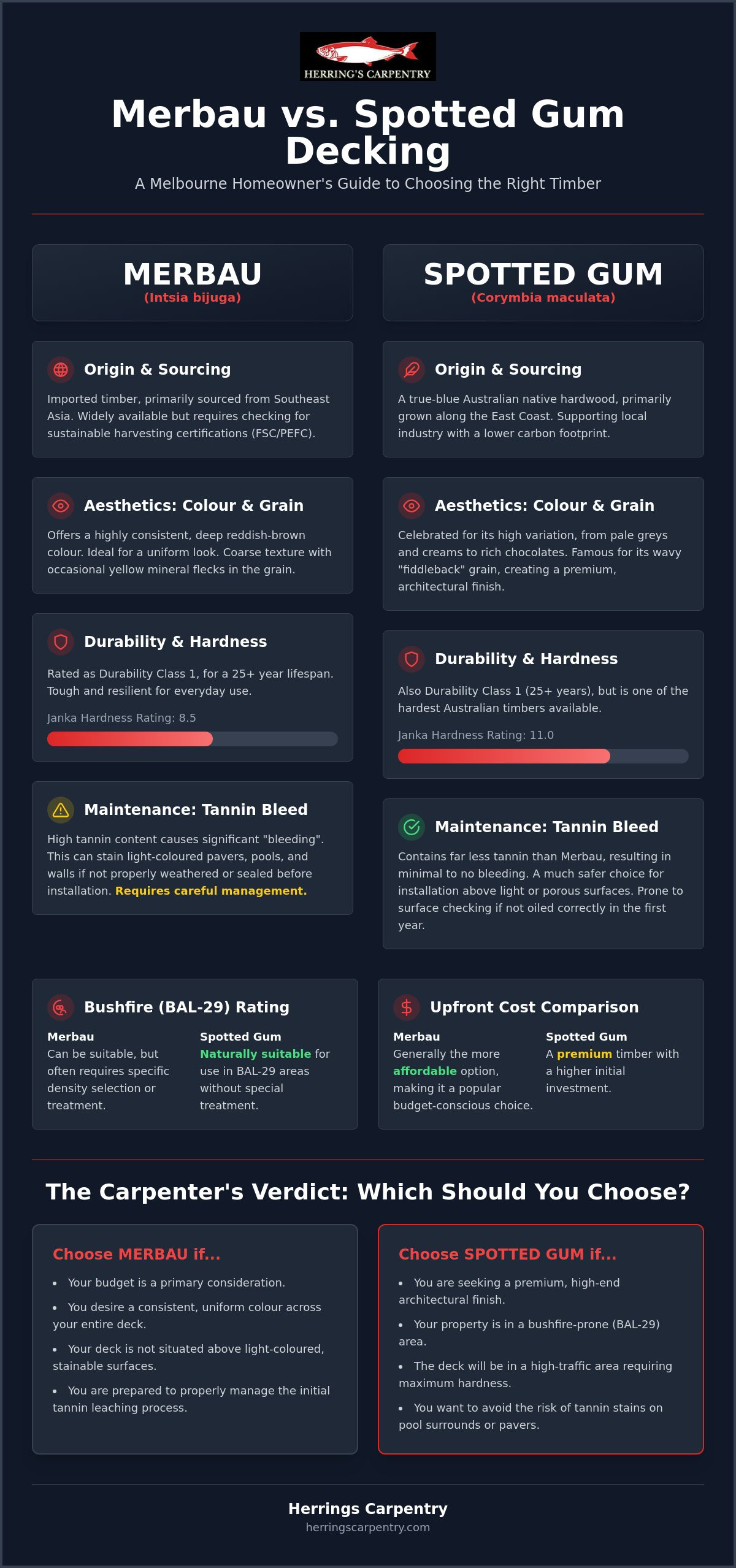
Merbau is the go-to for consistency. If you want a deck where every board looks like it belongs to the same family, this is your best bet. Merbau (Intsia bijuga) features a deep, reddish-brown hue often flecked with small yellow mineral deposits in the grain. It's a coarse-textured wood that takes oils well, though it will naturally weather to a silver-grey if you don't maintain it. This consistent tone makes it a safe choice for traditional homes or large areas where you don't want too much visual "noise."
Spotted Gum is the architect's favourite for a reason. It's famous for its "fiddleback" grain, a wavy pattern that adds incredible depth and character to the timber. The colour palette is diverse, ranging from pale creams and greys to rich, dark chocolates. This variety creates a high-end, organic look that complements modern Melbourne builds, especially those with large glass windows or industrial steel accents. It's a finer-grained timber than Merbau, giving it a smoother, more polished feel once it's sanded and finished.
Native vs. Imported: What It Means for You
The origin of your timber affects more than just the price. Merbau is imported, primarily from Southeast Asia. In 2026, savvy homeowners look for FSC or PEFC certification to ensure their Merbau is legally and sustainably harvested. It's a reliable product with steady availability, making it easier to source for quick turnarounds. Because it's an import, it's often more affordable, though global shipping can occasionally cause price spikes.
Spotted Gum is a true-blue Australian native, grown mostly along the East Coast. Choosing it often means a lower carbon footprint and the peace of mind that comes with supporting the local timber industry. It's a Durability Class 1 hardwood, just like Merbau, meaning it's rated for a life of 25 years or more in ground-contact or exposed conditions. While it's often more expensive and can have longer lead times due to high demand, its natural resistance to our local climate is hard to beat. When weighing up merbau vs spotted gum decking Melbourne projects often come down to this balance of budget versus local heritage.
Performance in Melbourne’s "Four Seasons in One Day" Climate
Melbourne's weather is a brutal testing ground for any building material. One morning you're dealing with 38-degree north-westerly winds that bake the timber; by 4 PM, a cool change brings 90% humidity and driving rain. This constant cycling is why the choice of merbau vs spotted gum decking Melbourne matters so much. If you're building in a Bayside suburb like Brighton, you have salt air and intense morning sun to contend with. If you're out in the Dandenongs, you're dealing with deep shade, dampness, and higher rot risks. Each environment demands a different response from the wood.
Density matters for high-traffic family decks. Spotted Gum is one of the hardest timbers available, with a Janka rating of 11. It's incredibly resilient against high heels, dropped BBQ tongs, and kids' scooters. Merbau is no slouch at 8.5, but in a head-to-head for pure impact resistance, the native gum wins every time. However, that hardness comes with a trade-off in how the timber handles moisture. Understanding the technical Spotted Gum properties is vital, as its higher density can make it more prone to surface checking if it's not oiled correctly during the first year.
Managing Timber Movement and Shrinkage
Precision is everything during a Melbourne winter. Because Spotted Gum has a higher tangential shrinkage rate, it's more reactive to moisture changes in the air. We have to be exact with our gapping; if you gap it too tight in a dry summer, it'll buckle when the humid Bayside air hits it in July. Merbau is much more stable and "forgiving" for larger spans because it stays put once it's fixed. Melbourne’s rapid temperature shifts cause timber to "work" constantly, expanding and contracting within the space of a few hours. A seasoned carpenter knows how to account for this movement so your screws don't snap and your boards don't cup over time.
UV Resistance and Grey-Out
High UV levels in a Victorian summer will turn any timber silver-grey within months if it isn't maintained. Merbau tends to hold its deep red-brown pigment slightly longer than the lighter tones of Spotted Gum, but both will eventually succumb to the sun. Some homeowners actually prefer the weathered look. Spotted Gum carries the "silver-grey" aesthetic beautifully because its natural grain variations still show through the grey patina. If you want to keep that rich, "just installed" colour, you'll need a high-quality UV-resistant oil applied annually. If you're feeling overwhelmed by the maintenance schedules for custom outdoor structures, it's best to plan your finish before the first board is even laid.
The "Bleeding" Question: Maintenance and Tannins
If there's one thing that keeps Melbourne homeowners up at night when choosing between merbau vs spotted gum decking Melbourne, it's the fear of red tannin stains on their brand-new travertine or bluestone pavers. Tannin leaching is a natural process where water-soluble oils wash out of the wood. Merbau is notorious for this. If you don't manage it, a single night of heavy rain can leave your pool surrounds looking like a crime scene. Spotted Gum has a much lower tannin profile, making it the safer bet for high-end landscaping where light-coloured surfaces are involved.
After 30 years in the trade, I've seen plenty of DIY disasters where people didn't account for "bleeding." It isn't just about the mess; it's about the longevity of the timber. Those tannins are part of the wood's natural defence against rot. When they leach out, the timber becomes more porous and susceptible to the elements. This is why the initial treatment phase is the most critical part of your deck's life cycle. A properly managed bleed-off ensures your timber stays stable and your surrounding surfaces stay clean.
Dealing with Merbau Tannin Leaching
You can't stop Merbau from bleeding entirely, but you can control where it happens. I always recommend pre-sealing all four sides of the boards before they even touch the joists. This locks in a good portion of the tannins and provides an immediate barrier. If you're working with raw timber, you can use the "hose-down" method to accelerate the process. Lay the boards out on the lawn, well away from porous surfaces, and soak them repeatedly over a few days. This forces the bulk of the initial "bleed" out before installation. If you do get a stain on your pavers, don't panic. A mix of oxalic acid and water usually lifts the red marks if you catch them early.
The 2026 Maintenance Routine
In 2026, we have access to water-based oils that outperform the old solvent-based finishes of the past. These modern coatings allow the timber to breathe while providing superior UV protection against the Victorian sun. For a new hardwood deck, the first 12 months are make-or-break. I suggest a light clean and a fresh coat of oil at the six-month mark, then move to an annual schedule. This routine keeps the grain supple and prevents the small surface cracks that can appear in Spotted Gum. If your project includes overhead structures, learning how to maintain your Melbourne pergola is just as important to ensure your entire outdoor living area ages at the same rate. Stick to a simple, consistent routine and your deck will look as good in year ten as it did on day one.
Bushfire Ratings (BAL) and Sustainability Costs
If you live in Melbourne’s leafy fringe suburbs like Eltham, Warrandyte, or around the Dandenong Ranges, your choice of timber isn't just about looks. It's a matter of compliance. Victorian building regulations are strict about the materials used in Bushfire Attack Level (BAL) zones. When comparing merbau vs spotted gum decking Melbourne residents often assume they need to switch to expensive composites or steel to stay safe. That isn't the case. Both of these hardwoods are naturally fire-resistant and are officially recognised as bushfire-resisting timbers under Australian Standard AS 3959.
For many of my clients, the decision comes down to a balance of safety and sustainability. Merbau is a powerhouse of durability, but because it's an import, you have to be diligent about checking for FSC or PEFC certification. In 2026, the focus on ethical sourcing is higher than ever. Spotted Gum offers a local alternative that is harvested under strict Australian forestry laws. It's a choice that feels right for the landscape while meeting the toughest regulatory hurdles. You get a deck that protects your home and supports local industry at the same time.
Spotted Gum: The Bushfire-Ready Native
Spotted Gum, or Corymbia maculata, is a top-tier choice for high-risk zones. It is one of only a handful of timbers naturally dense enough to be used in areas rated up to BAL-29 without needing additional fire-retardant treatments. This inherent density means the wood is harder to ignite and burns much slower than softer timbers. It's a future-proof investment. As climate patterns shift and local councils update their risk maps, having a deck that already meets high safety standards adds a layer of security to your property value and your family's safety.
Cost Analysis: Beyond the Price per Lineal Metre
Budgeting for a deck involves more than just the cost of the boards. Generally, you can expect to pay a 20% to 30% premium for Spotted Gum over Merbau. This price gap exists because Merbau is a high-volume import, whereas native Spotted Gum is subject to the supply limits of local sustainable harvesting. You also have to factor in labour. Because Spotted Gum has a Janka hardness rating of 11 kN, it’s significantly tougher on tools than Merbau. It requires more frequent pre-drilling and high-quality stainless steel fixings to prevent snapping.
While the upfront cost is higher, a well-built native hardwood deck is a major selling point in the Melbourne real estate market. Buyers recognise the quality of a native finish, and the long-term value often outweighs the initial saving of an imported product. If you're ready to invest in a structure that stands up to both the elements and the inspectors, consider talking to a professional about expert deck construction to get your measurements and BAL compliance right from the start.
The Carpenter’s Verdict: Which Timber Should You Choose?
After three decades on the tools, I can tell you that the "best" timber depends entirely on the specific conditions of your block. If you're working with a strict budget or building a massive platform in a shaded suburban backyard where tannin runoff isn't a concern, Merbau is a reliable workhorse. It’s consistent, easy to source, and stays exactly where you nail it. But if you’re building around a pool, living in a bushfire-prone area, or want a high-end architectural finish that looks like it belongs in a design gallery, Spotted Gum is the clear winner. In the debate of merbau vs spotted gum decking Melbourne homeowners often forget that the timber is only half the battle; the environment it lives in dictates the final choice.
My 30 years of experience has taught me that a deck is an investment in your lifestyle, not just a pile of wood in the backyard. I’ve seen how these timbers age in every corner of the city, from the humid Bayside air to the dry, windy north. The right choice for your neighbour might be the wrong choice for you, especially if your deck faces the harsh afternoon sun or sits under a heavy canopy of gum trees.
Matching Timber to Your Lifestyle
Families with big dogs or kids with scooters should lean towards the density of Spotted Gum. It resists those everyday dings and scratches better than almost any other hardwood on the market. If you’re an entertainer who wants a seamless flow from your indoor floorboards to your outdoor area, the varied tones of Spotted Gum often provide a better match for modern Australian interior palettes. When you're planning a complete outdoor overhaul, Building the Perfect Deck and Pergola in Melbourne requires a timber that can handle the specific foot traffic and furniture movement your family expects.
Why Craftsmanship Trumps Material Choice
You can buy the most expensive Spotted Gum in Victoria, but if it’s laid without proper ventilation, it’ll rot from the underside within a few years. Airflow is non-negotiable. I always use joist protection tape to prevent moisture from sitting between the board and the frame, which is a common failure point I see in DIY jobs. Precision fixing is also vital. These hardwoods must be pre-drilled to avoid splitting the ends of the boards, and we only use high-gauge stainless steel fasteners to handle the natural movement of the wood.
A deck is only as good as the person who builds it. Choosing a master carpenter means you’re paying for the foresight to prevent cupping, rot, and structural failure before they start. If you want a deck that’s built to the highest standards of the trade and designed to last 25 years or more, it’s time to Get a quote from Shane at Herrings Carpentry. Let’s get the job done right the first time.
Build an Outdoor Space That Lasts
Choosing the right timber is a major step toward creating a backyard you'll love for decades. Whether you prioritise the consistent reliability of Merbau or the rugged, architectural beauty of native Spotted Gum, your decision should align with your specific property needs, maintenance appetite, and local bushfire regulations. Both hardwoods are exceptional choices for our climate when they are installed with the precision and care they deserve.
The final result of your merbau vs spotted gum decking Melbourne project depends heavily on the details that happen under the boards. Proper ventilation, joist protection, and the right fixings are what separate a ten-year deck from a thirty-year investment. As a family-owned team with 30+ years of local experience, we bring the expertise of a licensed and insured Melbourne carpenter to every project, ensuring your finish is as durable as it is beautiful.
Don't leave your outdoor lifestyle to chance. Request a custom decking quote from Melbourne’s master carpenters and let’s discuss how to make your vision a reality. We’re here to help you get the job done right.
Common Questions About Melbourne Decking
Does Merbau decking always bleed tannins?
Merbau will always release tannins when it first encounters moisture. It is a natural part of the timber's chemical makeup. You can manage this initial "bleeding" by hosing the boards down in a safe area before installation or by pre-sealing all four sides of the timber. Once the initial leaching process is finished, the staining risk stops almost entirely.
Is Spotted Gum decking termite resistant?
Spotted Gum heartwood is naturally resistant to termites and decay. It is rated as a Durability Class 1 timber, which is the highest possible rating for Australian hardwoods. While no timber is completely immune if it is left in direct contact with damp soil for years, Spotted Gum provides one of the toughest natural defences for a Melbourne backyard.
How much more expensive is Spotted Gum than Merbau in Melbourne?
When comparing merbau vs spotted gum decking Melbourne suppliers typically price Spotted Gum at a 20% to 30% premium for the raw materials. This price gap exists because Spotted Gum is a native product with strictly regulated harvesting. You should also factor in slightly higher labour costs because the timber is harder on tools and always requires precision pre-drilling.
Which timber is better for a pool area in Melbourne?
Spotted Gum is generally the superior choice for pool surrounds. Its lower tannin content means you won't have to worry about red stains ruining your light-coloured pool coping or expensive pavers. It is also an incredibly dense timber that handles the high foot traffic and constant splashing of a family pool area without wearing down as quickly as other woods.
Can I leave my Merbau deck to go grey naturally?
You can certainly leave Merbau to weather to a natural silver-grey if you prefer a rustic look. Many homeowners choose this to reduce their maintenance schedule. However, you should still apply a clear, high-quality sealer annually. This protects the wood fibres from the harsh Victorian sun and prevents the boards from splintering or cupping even as the colour fades.
What is the best oil for Spotted Gum decking in the Victorian climate?
In 2026, the best results come from high-quality water-based oils with strong UV inhibitors. These modern finishes allow the timber to breathe and are much easier to reapply than old-school solvent-based stains. They help maintain the unique "fiddleback" grain of Spotted Gum while protecting the wood from the rapid temperature shifts and high humidity common in Melbourne.
Does a Spotted Gum deck require a special BAL-rated subframe?
Your deck subframe must always meet the same Bushfire Attack Level (BAL) requirements as your decking boards. If you are building in a BAL-29 zone, your joists and bearers need to be compliant with Victorian building codes. This often involves using non-combustible materials like steel or specific fire-resistant hardwoods. Always check your local council's requirements before starting the build.
How long will a Merbau deck last if properly maintained?
A well-maintained Merbau deck can easily last 25 to 40 years. It is a Durability Class 1 hardwood, which means it has a high natural resistance to rot and fungal attack. If you stick to a consistent oiling routine and ensure there is plenty of ventilation underneath the structure to prevent moisture buildup, the deck will likely outlast your time in the home.


Comments