
How to Plan and Execute a Master-Crafted Carpentry Project in Melbourne
Updated: Jul 8
The difference between a deck that looks good on completion and one that stands firm after five Melbourne winters isn't just luck; it's the result of precise engineering and material choice. Many homeowners worry about "cowboy" builders who cut corners on structural integrity or ignore the complexities of Victorian building regulations. When you hire a master carpenter Melbourne families can rely on, you aren't just paying for labour. You're investing in a professional who understands how to navigate the new Building and Plumbing Commission (BPC) requirements and which timbers can actually survive our city's "four-seasons-in-one-day" weather.
It's understandable to feel overwhelmed by the permit process or the fear of a project failing to meet Australian Standards. You want a home improvement that adds genuine value and peace of mind without the stress of hidden costs or structural issues. This guide will show you how to identify true craftsmanship and plan a residential project that thrives in our unique climate. We will walk through everything from understanding the latest statutory insurance schemes to selecting weather-resistant materials for your next renovation or outdoor build.
Table of Contents
What Defines a Master Carpenter in Melbourne?
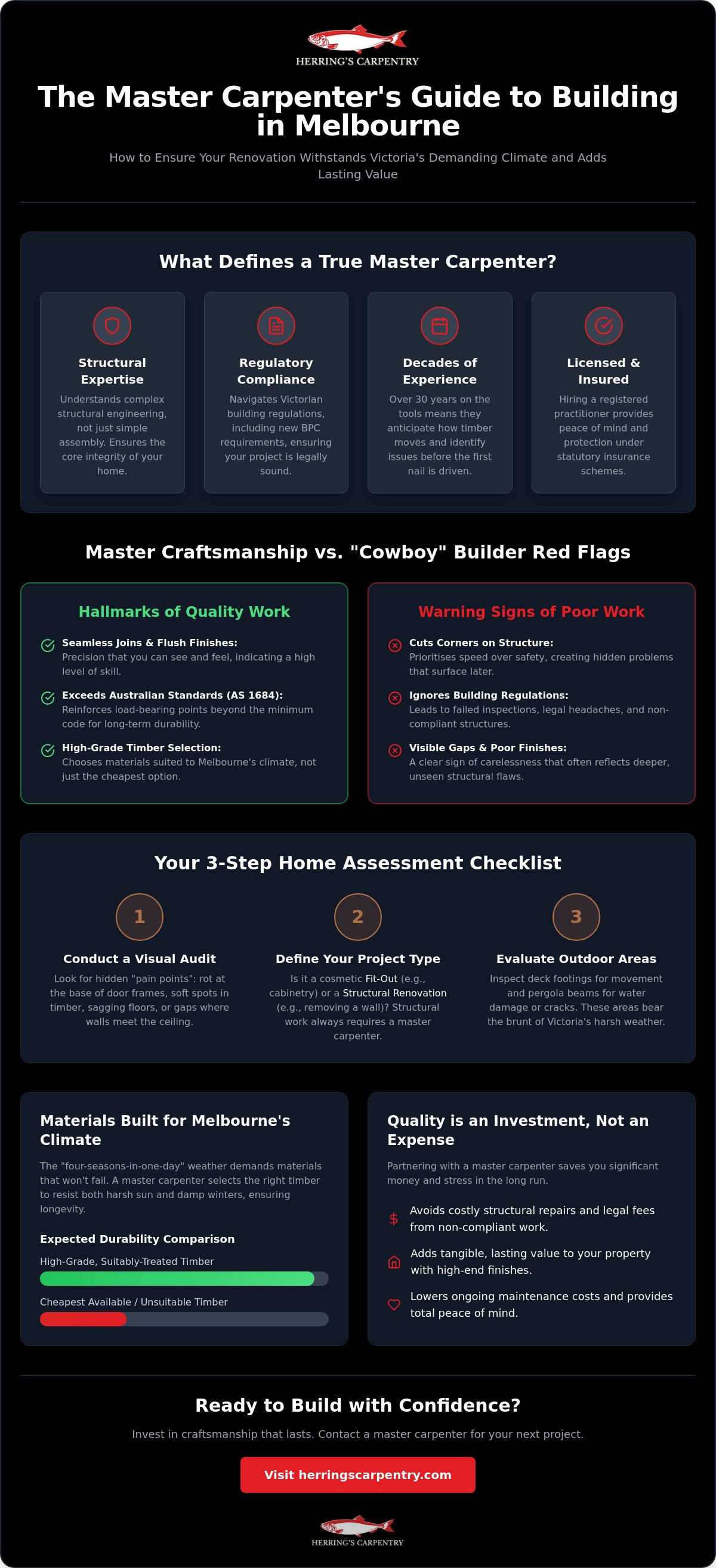
In Melbourne, the title "Master Carpenter" isn't just a marketing label. It's a distinction earned through years on the tools and a deep understanding of how buildings actually work. While many can swing a hammer, a master carpenter Melbourne residents can rely on is someone who bridges the gap between simple assembly and complex structural engineering. This level of expertise is a skilled trade and a craft that requires more than just basic knowledge; it demands an eye for detail and a commitment to longevity.
The regulatory landscape in Victoria is strict for a reason. As of July 2026, the Building and Plumbing Commission (BPC) has taken over as the primary regulator for domestic building work. Any significant carpentry project requires a registered practitioner who understands these evolving compliance standards. Hiring a licensed master tradesman instead of a general handyman ensures that your project is legally sound and covered by the necessary insurance schemes. This is the difference between a project that passes its final inspection and one that becomes a costly legal headache.
Experience is the ultimate teacher in this industry. When a professional like Shane Herring brings over 30 years of experience to a site, they aren't just looking at the blueprints. They are anticipating how the timber will move over the decades and identifying potential structural hurdles before the first nail is driven. This seasoned perspective is what sets a true master apart from someone who has only been in the trade for a few years. It's about getting the job done right the first time.
The Role of Australian Standards in Quality Craftsmanship
Every residential project in Victoria must adhere to AS 1684, the code for Residential Timber-Framed Construction. A master carpenter Melbourne homeowners trust doesn't just meet these codes; they often exceed them. Whether it's framing for extensions or new builds, ensuring that every joint is tight and every load-bearing point is reinforced is non-negotiable. This "measure twice, cut once" philosophy is vital when dealing with complex Melbourne extensions where precision determines the structural integrity of the entire home.
Spotting the Difference: Master Work vs. Basic Carpentry
You can often tell the quality of work just by looking at the finishes. Master-crafted projects feature seamless joins, flush finishes, and correctly pitched outdoor structures like pergolas or decking. Beyond the surface, the structural cues are even more telling. A master will conduct thorough load-bearing assessments and select high-grade Australian timber suited for the specific task rather than opting for the cheapest available materials. Master carpentry is the fusion of precision and durability.
How to Assess Your Home's Carpentry and Renovation Needs
Before you pick up a tape measure, you need to understand what your home is telling you. A thorough assessment starts with a visual audit of your existing timber structures. Look for signs of rot in areas exposed to moisture, such as the base of door frames or external cladding. Soft spots in the wood or peeling paint often hide deeper instability. If you notice sagging in the floor or visible gaps where walls meet the ceiling, these are 'pain points' that suggest your home requires structural framing changes rather than just cosmetic updates.
You need to distinguish between a cosmetic fit-out and a major structural renovation. A fit-out involves updating visible elements like custom cabinetry or internal doors. A structural project involves altering the load-bearing skeleton of the house. If you are planning to knock out a wall or add an extension, you are moving into structural territory. This is exactly when you should call in a master carpenter Melbourne specialist. Getting a professional structural integrity assessment early prevents expensive mistakes and ensures your home remains safe during the build.
Evaluating Outdoor Living Spaces
Outdoor structures bear the brunt of Victoria's weather. Check your deck footings for movement and inspect pergola beams for cracks or water damage. A well-designed space should feel like an extension of your lounge room. If the transition feels clunky, look at integrated deck and pergola packages Melbourne homeowners use to create seamless indoor-outdoor flow. Adding feature walls or high-quality external cladding can also protect your home while significantly boosting its street appeal. A master carpenter Melbourne expert can identify if your current beams are up to the task of supporting a new roof or heavy cladding.
Interior Fit-Out and Storage Audit
Inside the home, look for wasted space. Off-the-shelf furniture rarely fits the unique dimensions of older Melbourne houses. Custom cabinetry can turn an awkward corner into a functional storage hub. Don't forget to evaluate your door and window seals. Improving these can drastically increase your home's thermal efficiency, keeping you warmer in winter and cooler in summer. If a room feels dark and cramped, consider where a master-installed skylight could be placed. Natural light changes the entire feel of a renovation. To get a clear idea of what is possible for your property, you can always consult with a seasoned professional to discuss your specific needs.
Choosing the Right Materials for Melbourne's Volatile Climate
Melbourne's "four seasons in one day" isn't just a local saying; it's a structural stress test for your home. A deck that looks perfect in October might be cupping or splitting by January if the wrong timber was used. This is where the expertise of a master carpenter Melbourne families trust becomes invaluable. We don't just pick wood that looks nice on a showroom floor; we select materials based on how they handle 40-degree UV blasts followed by a week of lashing rain and high humidity.
Durability is non-negotiable in Victoria. Hardwoods like Spotted Gum or Ironbark are the gold standard for longevity. These species have a high natural density, making them far more resistant to rot, fungal attack, and termites than cheaper alternatives. Softwoods, such as treated pine, certainly have their place in internal framing or budget-conscious projects, but they require significantly more maintenance to prevent warping when used outdoors. For those who want the look of timber without the annual oiling, high-quality composite materials are a reliable, low-maintenance alternative for modern outdoor living.
We also prioritise sustainable sourcing. It's about ensuring your timber is ethically harvested and fit for its intended purpose. Using the wrong grade of timber for a structural beam isn't just a mistake; it's a safety risk. A seasoned professional ensures every piece of wood meets the required stress grade for the job at hand.
Top Timber Choices for Melbourne Decks and Pergolas
Spotted Gum: This is a premium Australian hardwood. It's incredibly dense and features a high natural fire resistance, making it the ideal choice for homes in leafy, fire-prone suburbs.
Merbau: A very popular choice due to its durability and rich, reddish-brown colour. You do need to be mindful of tannin bleed, though. If it isn't seasoned or sealed correctly, it can stain your concrete or pavers during the first few rains.
Ironbark and Silvertop Ash: These local favourites offer incredible structural integrity. Ironbark is one of the hardest timbers available, while Silvertop Ash provides a beautiful, lighter aesthetic.
External Cladding and Feature Wall Materials
Your home's exterior is its first line of defence. High-quality external cladding Melbourne installations protect the internal framing from moisture and temperature swings. While timber cladding offers a classic, tactile look, it needs regular oiling to preserve its natural hue. If you prefer a "silvered" weathered look, specific species must be chosen to ensure the wood doesn't degrade. A master carpenter Melbourne specialist will help you select the right oils and finishes to seal the grain, ensuring your feature walls look as good in ten years as they do on day one.
Step-by-Step: Planning Your Master-Crafted Project
A successful build starts long before the first delivery of timber arrives on your nature strip. Most homeowners jump straight to the finishes, but a master-crafted project requires a methodical approach to the "bones" of the structure. First, you need to define your vision and budget without compromising on structural quality. It's better to build a smaller, high-quality deck than a large, flimsy one that won't last five years. Consulting a master carpenter Melbourne expert during this early phase is vital for identifying potential structural hurdles like soil stability or existing roof line complexities that could blow out your costs later.
Once the vision is clear, the planning moves into the technical and regulatory phases. This involves several critical steps:
Permit Navigation: Determining if you need a planning permit (for the look and use of the building) or a building permit (for the safety and construction method).
Detailed Design: Finalising drawings that account for every load-bearing beam and joint.
Material Selection: Choosing species like Spotted Gum or Ironbark that fit the structural requirements of the design.
Site Preparation: The essential "dirty work" where we establish solid footings and prepare the site for structural framing.
The Importance of Precision Framing
The framing phase is where the integrity of your home is decided. When you hire a carpenter for house extension Melbourne, you are paying for their ability to manage complex load-bearing transitions between the old and new sections of the property. A master carpenter Melbourne professional knows that if the frame is out by even a few millimetres, it will cause a domino effect throughout the rest of the build. Precision framing ensures the structural skeleton is perfectly plumb and level, which prevents future plaster cracks and door jams.
Navigating Local Council and Building Regulations
Compliance isn't just about avoiding fines; it's about protecting your property value and warranty. In Victoria, specific rules like the 1-metre rule for decks often dictate whether you need a building surveyor to sign off on the work. Failing to adhere to the Victorian Building Act can lead to insurance issues if you ever decide to sell. We take the stress out of this process by handling the "red tape" and ensuring every structural element meets or exceeds local standards. If you want to ensure your next build is fully compliant and built to last, you can start your project with a structural expert to get the planning right from day one.
Why Partnering with a Master Carpenter Saves Money Long-Term
The "Buy Once, Cry Once" philosophy is a hard-earned truth in the building industry. Choosing the cheapest quote often leads to a project that requires expensive repairs or a complete rebuild within a few short years. When you hire a master carpenter Melbourne homeowners can rely on, you're paying for a structure that is built to last decades, not just seasons. High-quality craftsmanship in structural framing and architectural finishes adds tangible value to your property, making it a sound financial investment rather than just a household expense.
Superior material selection and installation techniques significantly reduce your ongoing maintenance costs. As we discussed earlier, using the right grade of Australian hardwood for the specific Victorian climate prevents the warping and rot that plague budget builds. When joints are perfectly flush and load-bearing transitions are handled with precision, the structural integrity of your home remains intact. This prevents the "domino effect" of issues like cracked plaster or sticking doors that often follow a rushed, low-quality renovation. Peace of mind comes from knowing your project is backed by a 30-year legacy of local expertise.
To further protect this investment, a high-quality finish is essential. While our expertise lies in structural carpentry, we recognise that professional finishing by experts like Performance Painting is what truly shields your timber from the elements and ensures your home looks its best for decades.
The Herrings Carpentry Difference
We take a grounded, no-nonsense approach to every build. This means providing honest advice from the start, even if it isn't what you expected to hear. If a specific design for custom cabinetry won't hold up over time or a skylight placement will cause thermal issues, we'll tell you straight. Our family-owned values mean we are personally accountable for the work we do on your property. We treat your home with the same respect we show our own, which includes our commitment to leaving every Melbourne site cleaner and better than we found it.
Ready to Start Your Melbourne Project?
Getting an accurate quote for your next project shouldn't be a guessing game. Whether you are looking for a new deck, a structural extension, or specialised door and window installations, the process starts with a thorough consultation. During your initial meeting with Shane Herring, we will look at your site's specific challenges and discuss the most durable materials for your vision. We provide a clear, transparent breakdown of the work required so there are no surprises down the track. Contact Herrings Carpentry today to discuss your next master-crafted project and ensure your home improvement is built to stand the test of time.
Build for the Future of Your Melbourne Home
Planning a home improvement project is a significant commitment. It requires a balance between architectural vision and the practical realities of Victorian building regulations. By prioritising structural integrity and selecting materials that can withstand our local climate, you ensure your investment adds lasting value to your property. Whether you are installing a new skylight or framing a complex extension, the quality of the "bones" determines the success of the finish.
Choosing a master carpenter Melbourne families can depend on means you don't have to guess about the safety or longevity of your build. With over 30 years of local experience, Herrings Carpentry provides the honest, no-nonsense advice you need to get the job done right. As a VBA licensed and insured, family-owned operation, we take pride in every joint we cut and every frame we stand. We believe in transparency and accountability from the first consultation to the final site clean.
Ready to turn your plans into a durable reality? Get a Fair Dinkum Quote from Melbourne's Trusted Master Carpenter and start your project with a partner who values quality as much as you do. We look forward to helping you build something that stands the test of time.
Frequently Asked Questions
Do I need a permit for a new deck in Melbourne?
Yes, you generally need a building permit for any deck that is attached to a house or stands more than 800mm above ground level. Even for smaller, freestanding decks, local council planning schemes may have specific requirements regarding setbacks or site coverage in your specific suburb. It is always best to check with a building surveyor before you start digging footings to ensure your project remains compliant with Victorian building laws.
What is the difference between a carpenter and a master carpenter?
While any qualified carpenter has completed a standard apprenticeship, a master carpenter Melbourne residents can trust typically has decades of on-site experience and deep structural knowledge. This level of expertise allows them to manage complex framing, load-bearing extensions, and intricate finishing work that goes beyond basic assembly. They often hold a domestic builder’s licence, ensuring they can manage the entire scope of a structural project from start to finish.
How long does a typical home extension take to frame?
A typical residential extension frame usually takes between one and three weeks to complete depending on the complexity of the design and the size of the footprint. This timeline includes standing the walls, installing roof trusses or rafters, and ensuring the new structure is perfectly plumb and level. Weather conditions in Melbourne can play a part, so we always factor in a small buffer to ensure the timber remains protected and the work is precise.
Which timber is best for a low-maintenance outdoor pergola?
Spotted Gum and Ironbark are excellent choices for pergolas because of their high natural density and resistance to the elements. These hardwoods require less frequent oiling than softwoods like treated pine to maintain their structural integrity over time. If you want a truly low-maintenance finish, you might consider using high-quality composite materials for the decking portion of the structure, which eliminates the need for sanding or staining altogether while resisting rot.
Can a master carpenter help with my internal renovation and cabinetry?
Yes, a master carpenter Melbourne expert is highly skilled in internal fit-outs, including custom cabinetry and storage solutions. Whether you need a bespoke wardrobe, a built-in entertainment unit, or new internal door installations, a professional can create pieces that fit the unique dimensions of your home. This custom approach ensures you maximise every square centimetre of space while maintaining a high-end architectural finish that off-the-shelf furniture simply cannot match.
Is it worth upgrading to composite decking in the Melbourne climate?
Upgrading to composite decking is often worth the initial investment if you want to avoid the ongoing labour of oiling and sanding every year. In Melbourne’s volatile climate, high-quality composite boards are less likely to warp, rot, or splinter compared to some natural timbers. It is a practical choice for busy families who want a durable outdoor space that looks consistent year-round with nothing more than an occasional wash with soapy water.
How do I verify if a carpenter is properly licensed in Victoria?
You can verify a tradesperson’s credentials through the Building and Plumbing Commission (BPC) online register. Since July 2026, the BPC has been the unified regulator for domestic building work in Victoria, taking over the register from the previous authorities. Simply enter the individual’s name or licence number to confirm they are registered for the specific type of carpentry or building work you require. This step is essential for protecting your warranty.
What happens if my existing house frame isn't perfectly level for an extension?
It is very common for older Melbourne homes to have frames that have settled or moved out of level over the decades. A master carpenter will assess these discrepancies during the site preparation phase and use specialised techniques to "pack out" or adjust the new framing. This ensures the extension is perfectly level even if the original house is not, preventing issues with sticking windows, uneven doors, and plaster cracks later in the project.


Comments