
Garage Conversion Melbourne: The Master Carpenter’s Guide to Reclaiming Your Space
What if the solution to your family’s lack of space isn’t a high-interest mortgage for a bigger house, but the concrete floor currently hidden under your car? Most homeowners look at their garage and see a place for lawnmowers and clutter, yet it is often the most underutilised asset on your property. We understand the hesitation. You don't want a room that feels like a shed, and you certainly don't want to deal with Melbourne’s damp winters making the space feel cold or mouldy.
A proper garage conversion Melbourne project is about more than just a coat of paint and some carpet. It requires a structural approach to ensure the space is legally habitable and genuinely comfortable. You deserve a room that feels like a natural part of the house, adds real value to your property, and meets every Building and Plumbing Commission standard. When done right, it is the most cost-effective way to gain a bedroom or home office without the stress of a major extension.
In this guide, we will walk you through the essential steps to reclaiming your space. You will learn about the structural requirements for ceiling heights, the importance of proper insulation, and how master carpentry turns a cold garage into a premium living area.
Key Takeaways
Learn why a successful conversion is a structural repurposing of your existing space that adds genuine value to your Melbourne home.
Discover how structural wall framing and new sub-floor systems create a durable foundation that feels like a seamless extension of your house.
Understand the essential permits and regulatory standards required for a garage conversion Melbourne to ensure your project is legal and compliant.
Explore the insulation and moisture protection techniques needed to keep your new room warm and dry throughout Melbourne’s damp winter months.
See how bespoke fit-outs and custom storage solutions can transform a basic shell into a premium, highly functional living suite.
Table of Contents
Transforming Your Melbourne Garage: More Than Just an Extra Room
A garage conversion in Melbourne is a structural transformation of a building originally designed for vehicles into a space designed for people. It isn't a weekend DIY project involving a few rugs and a desk. It is a methodical repurposing of the existing footprint to create a fully integrated part of your home. For many local families, this is the most logical way to solve the "lack of space" problem without the headache of selling or the massive expense of a full-scale extension. We see it as reclaiming the potential already sitting under your roof.
High land prices across the suburbs mean that every square metre of your property carries a high value. Leaving a garage as a dumping ground for old paint tins and sports gear is a waste of potential equity. A professional garage conversion Melbourne project turns a cold shell into a habitable suite. This concept, often referred to as a Garage apartment or 'Fonzie flat' in the Australian context, provides a versatile solution for growing families. By choosing to convert, you can gain a dedicated home office, a quiet guest wing, or a secondary living area that feels like it was part of the original build.
Why Melburnians are Choosing Conversions Over Moving
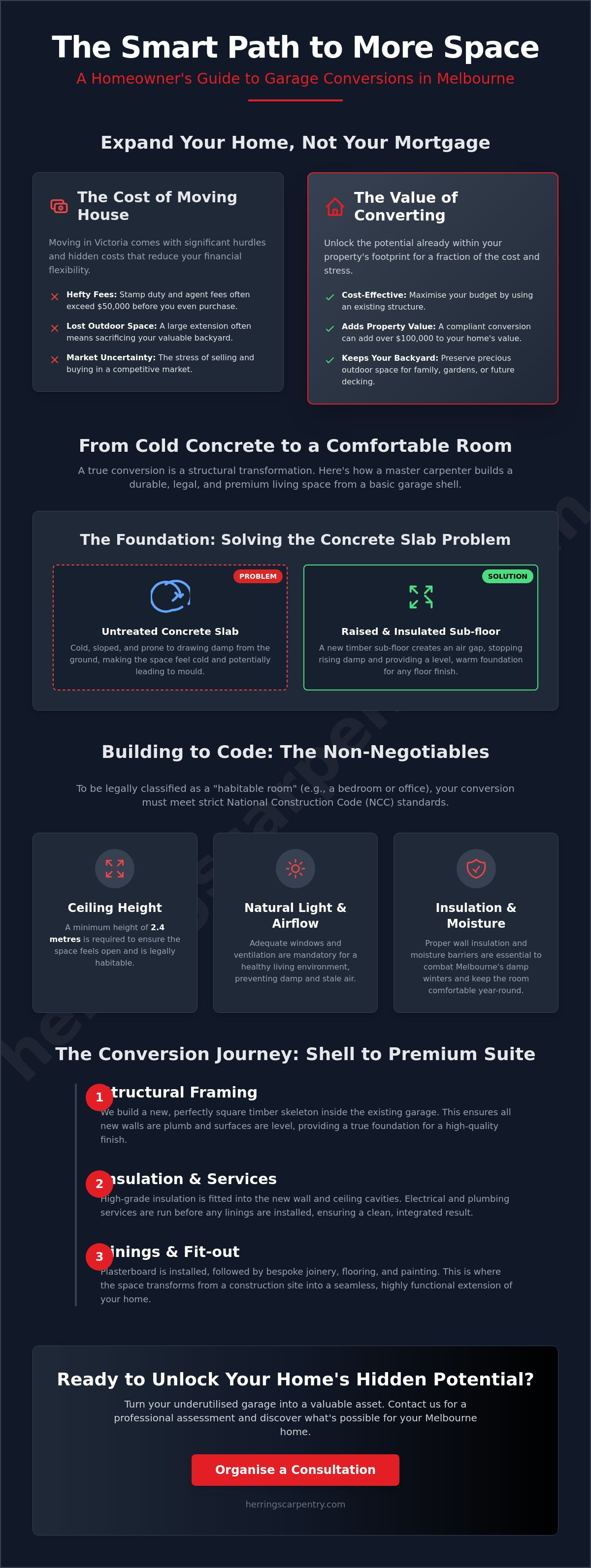
Moving house in Victoria involves significant costs, including stamp duty and agent fees, which can easily exceed $50,000 before you even buy the next property. A conversion is far more cost-effective. It also allows you to keep your backyard intact. Rather than building a rear extension that eats into your lawn, you can preserve that space for future projects like a new decking and pergola. This approach maximises your indoor floor area while keeping your outdoor lifestyle options open. It is about working smarter with the structures you already own.
The Habitable Space Standard (NCC and ResCode)
There is a major legal difference between a "man cave" used for storage and a "habitable" bedroom. To be considered a habitable room, the project must comply with the National Construction Code (NCC). This includes specific requirements for ceiling heights, usually a minimum of 2.4 metres, along with strict standards for natural light and ventilation. If a conversion doesn't meet these standards, it cannot be legally sold as a bedroom or living area. Getting this right is the difference between a room that adds $100,000 to your property value and one that a building inspector will flag as a liability. We focus on the structural framing and compliance that ensures your new room is a permanent, legal asset to the home.
Structural Integrity: The Master Carpenter’s Approach to Framing and Floors
Structural integrity is the backbone of any successful garage conversion Melbourne project. Most garages were built to house a vehicle and some garden tools, not to provide a climate-controlled living environment. This means the original structure often lacks the precision, insulation, and moisture protection required for a bedroom or home office. A master carpenter treats the existing garage as a shell, building a new, perfectly square timber skeleton inside it to ensure the finished room feels like a genuine part of the home.
Precision is the priority when working within older structures. Most Melbourne garages are notoriously out of square, with floors that slope and walls that aren't quite plumb. If you try to install plasterboard or cabinetry against these uneven surfaces, the result looks amateur and unfinished. We focus on leveling the floor and squaring the walls from the outset, providing a true foundation for every other trade that follows. This methodical approach is what separates a basic DIY job from a premium habitable suite.
Solving the Concrete Slab Problem
The concrete slab is your first hurdle. In most local homes, the garage floor is a raw concrete pour that sits lower than the rest of the house. It's cold, hard, and prone to drawing moisture from the ground. Bare concrete is unsuitable for living areas because it lacks thermal mass and can lead to mould issues under floorboards. We use timber battening and specialized flooring systems to create an insulated air gap above the concrete. This raised floor system prevents rising damp from reaching your internal finishes, ensuring the room remains dry and healthy throughout the year.
Wall Framing and Structural Reinforcement
Wall framing is where we transform the "garage feel" into a proper house. By building internal timber frames against the existing brickwork, we create a cavity for high-performance insulation and electrical wiring. This framing also provides the necessary support for new door and window installations, ensuring they are weather-tight and structurally sound within the old masonry. We use premium Australian timbers to ensure every wall is dead-straight. This structural reinforcement is also vital if your design includes new skylights or larger openings that require the existing roof load to be redistributed safely.
When the framing is done right, the transition between the original house and the new room is seamless. There are no awkward steps, draughty corners, or visible signs that the space was once a place for the car. It is a solid, permanent structure built to the same standards as a new home build. This level of craftsmanship ensures your investment is protected and your new living space is built to last for decades.
Maximising Comfort: Insulation, Light, and Moisture Protection
Standard garages are notoriously uncomfortable. They are usually built as "single-skin" structures, meaning there is only one layer of brick or metal between you and the elements. This creates a "tin box" effect where the space becomes an oven in February and a walk-in fridge by July. For a successful garage conversion Melbourne families can actually enjoy, we must address this thermal bridge. It isn't just about comfort; it's about preventing the structural rot and mould that occurs when warm internal air hits a cold, uninsulated external wall.
Moisture protection is the first line of defence. Before any timber framing goes up, we install high-quality vapour membranes and moisture barriers. These layers ensure that Melbourne’s persistent winter dampness stays outside where it belongs. Without this protection, moisture can seep through the slab or brickwork, ruining your new plasterboard and creating a breeding ground for mould. We take a "get it right once" approach to these hidden layers because you can't go back and fix them once the room is finished.
Thermoregulation for the Melbourne Climate
Effective thermoregulation requires more than just a few bags of insulation. To comply with the National Construction Code (NCC), your conversion must meet specific R-value targets for thermal resistance. We use high-density insulation batts in both the walls and the ceiling to create a sealed thermal envelope. This investment pays for itself by drastically reducing the cost of running split-system air conditioners or heaters. We also suggest double-glazed window units, which act as a final barrier against the city's unpredictable temperature swings and street noise.
Bringing the Outside In: Skylights and Windows
A room without enough natural light will always feel like a converted garage. The NCC requires that windows make up at least 10% of the floor area for light and 5% for ventilation. However, many garages are built right on the property boundary, making traditional windows difficult or impossible due to privacy and fire-rating laws. This is where skylights Melbourne residents often choose become the perfect solution. They flood the room with natural light from above, making a small footprint feel twice as large. Strategic placement of these units, combined with high-set windows, ensures you get plenty of fresh air and sunlight without feeling exposed to the neighbours.
Navigating Regulations and Permits for Melbourne Conversions
Navigating the legal side of a garage conversion Melbourne project can feel like a headache, but it’s the only way to protect your investment. We aren't fans of unnecessary paperwork either. However, converting a non-habitable garage into a living space is a significant structural change that the authorities take seriously. Under Victorian law, specifically the Building Act 1993, any work that changes the use of a building or exceeds A$10,000 in value requires a building permit. Since July 1, 2025, the Building and Plumbing Commission (BPC) has taken over as the primary regulator from the old VBA. Following their standards ensures your new room is safe, legal, and covered by your home insurance policy.
A "Certificate of Occupancy" or a final inspection certificate is your most valuable document when it comes time to sell your home. Without it, you cannot legally list the conversion as a bedroom or living area. If you skip the permit process, you risk more than just council fines. You might find yourself facing an insurance denial if a claim ever arises, or you could be forced to tear the work down by a building order. We prioritize a transparent approach to these regulations so you can sleep soundly in your new space knowing it meets every safety and legal requirement.
The 5-Step Permit Process
Classification: We determine if your project meets the "habitable" criteria under the National Construction Code, focusing on ceiling heights and light.
Documentation: You'll need structural plans from a draftsperson that show how the new timber framing and sub-floors will be constructed.
Approval: These plans are submitted to a private or council Building Surveyor who issues the building permit.
Inspections: A surveyor will conduct site visits to check the structural framing and insulation before the walls are closed up.
Completion: Once the final inspection is passed, you receive the official certificate that confirms the space is legally habitable.
Addressing Boundary and ResCode Issues
Most Melbourne garages sit right on the property boundary, which triggers specific ResCode requirements. This often affects window placement and fire ratings. You can't simply install a standard window in a wall that faces the neighbour's fence if it’s within 900mm of the boundary. We often use fire-rated materials to meet these safety standards. There are also rules about replacing the off-street parking you’ve just "lost" by converting the garage. Some councils require a car parking waiver or a designated space elsewhere on the lot. Checking for easements is also a non-negotiable first step, as you cannot build over certain water or sewerage assets without specific permission.
If you're feeling overwhelmed by the local council requirements or the technical side of the building code, our team provides renovation support and fit-outs to help guide your project from the first stud to the final certificate.
Bespoke Fit-Outs: Turning a Shell into a Premium Suite
Once the structural framing and insulation are sorted, the focus shifts to the finishing touches. A high-quality garage conversion Melbourne isn't just about making the space livable. It's about making it beautiful. We use custom carpentry to bridge the gap between a basic renovation and a premium suite, similar to the high-standard building services provided by Horns Construction. This involves selecting materials that match the character of your home, using feature walls and internal cladding to ensure the new room doesn't feel like a sterile box, but a place where you actually want to spend time.
The goal is a seamless transition. When someone walks from your hallway into the converted space, they shouldn't notice a change in quality or style. We achieve this through precise trim work, matching skirting boards, and high-end door installations. By focusing on these tactile details, we elevate the conversion from a simple storage repurpose to a high-value asset. This level of craftsmanship is what ensures your investment pays off when it’s time to value the property.
Custom Cabinetry and Smart Storage Solutions
Garages often have limited footprints. Every centimetre counts. Standard flat-pack furniture rarely fits perfectly, leaving awkward gaps that collect dust and waste space. We design and install custom cabinetry melbourne homeowners can rely on to maximise their floor area. Floor-to-ceiling storage units can hide away office supplies or guest linens, while integrated desks and floating shelving keep the room feeling open. This level of detail turns a small studio into a highly functional workspace or a luxury guest wing without the clutter.
The Herrings Carpentry Difference: 30 Years of Experience
Choosing the right partner for your structural fit-out is a matter of trust. Shane Herring brings over 30 years of hands-on experience to every project. We don't believe in flashy marketing or high-pressure sales. Instead, we focus on honest, no-nonsense communication and a quiet pride in our workmanship. As a licensed team, we ensure that every stud, joist, and cabinet is installed with the precision that only decades of trade experience can provide. We treat your property with respect and keep the building process transparent from start to finish.
A successful conversion is an investment in your lifestyle and your property's value. Don't settle for a room that feels like a compromise or a temporary fix. Contact Shane and the team for a straightforward quote on your garage conversion and discover how we can help you reclaim your space with a build that is as reliable as the finished structure.
Start Your Structural Transformation Today
Reclaiming your underutilised garage is a practical way to expand your living area without the high cost of moving house. A successful garage conversion Melbourne homeowners can be proud of depends on two things: structural integrity and long-term comfort. By focusing on a solid timber sub-floor, high-rated insulation, and a clear understanding of building regulations, you turn a cold shell into a premium, habitable suite. This approach doesn't just give you more room; it adds genuine equity to your property through quality craftsmanship that meets every modern standard.
We take pride in doing the job right the first time. As a family-owned Melbourne business with over 30 years of experience, we bring master-level expertise to every structural frame and bespoke fit-out. We don't believe in cutting corners or using confusing jargon. Instead, we offer straightforward advice and reliable results that stand the test of time. It is time to stop using your garage as a storage unit and start using it as a proper part of your home.
Get a no-nonsense quote for your Melbourne garage conversion from Herrings Carpentry and take the first step toward a more spacious, comfortable lifestyle. We look forward to helping you realise the full potential of your property.
Frequently Asked Questions
Do I need a council permit to convert my garage in Melbourne?
Yes, you almost always need a building permit for this type of project. Any work that changes a non-habitable space into a living area is a change of use under the National Construction Code. Since the Building and Plumbing Commission (BPC) took over as the regulator in July 2025, these standards are strictly enforced to ensure the room is safe, structurally sound, and properly insured.
How much value does a garage conversion add to a Melbourne house?
A professional conversion adds genuine equity by increasing your home's functional floor area without the massive overheads of a full extension. While specific market gains depend on your suburb, turning a dumping ground for clutter into a legal bedroom or home office makes your property far more appealing to buyers. It is a smart way to maximise your existing footprint in a high-value land market.
Can I convert my garage into a bedroom legally?
You can legally convert a garage into a bedroom as long as the space meets the National Construction Code (NCC) requirements for habitable rooms. This involves specific standards for ceiling height, natural light, ventilation, and moisture protection. Once the project is finished and passes a final inspection, you receive the certificate needed to legally list the room as a bedroom during a future sale.
What is the minimum ceiling height for a habitable garage conversion?
The minimum ceiling height required for a habitable room is 2.4 metres. This is a non-negotiable standard under the NCC for bedrooms and living areas. If your garage ceiling is lower than this, it cannot be legally classified as a habitable space. We always measure the existing clearance during our first visit to ensure your project can meet these legal requirements.
How do I stop my garage conversion from being cold and damp?
Stopping dampness requires a combination of vapour membranes on the concrete slab and high-performance insulation batts in the walls and ceiling. We install a raised timber sub-floor system to create an insulated air gap that prevents rising damp from reaching your internal finishes. This keeps the space dry and easy to heat during Melbourne’s colder months.
Do I need to replace my garage door with a wall?
Yes, you must replace the garage door to meet the thermal and weatherproofing standards required for a living space. A standard garage door doesn't provide the seal or insulation needed for a habitable room. Most homeowners choose to replace it with a structural timber-framed wall that includes a window or glass sliding door to bring in natural light.
How long does a typical garage conversion take to complete?
A typical garage conversion Melbourne project usually takes between four and eight weeks from the first stud to the final fit-out. The exact timeline depends on the complexity of the structural work and the level of custom cabinetry required. We provide a clear schedule at the start so you know exactly when the room will be ready for use.
Is it cheaper to convert a garage or build a new extension?
Converting an existing garage is significantly cheaper than building a new extension because the primary structure is already there. You don't have to pay for a new foundation, roof, or external brickwork, which are the most expensive parts of a traditional build. It is the most cost-effective way to gain a premium suite while keeping your backyard intact for other uses.


Comments