
Expert Skylight Installation Melbourne: A Carpenter’s Guide to Natural Light 2026
- 2 days ago
- 13 min read
A skylight isn't just a window on your roof; it's a significant structural modification that dictates the long-term health of your home. Many homeowners worry that opening up their ceiling will lead to structural damage or persistent leaks, and they're right to be cautious. Getting a professional skylight installation Melbourne wide requires more than just a quick cut and some sealant. It requires a carpenter's precision to ensure your roof remains sound while letting the sun in.
We understand the frustration of living in a dark, gloomy home where even the brightest Melbourne day feels dim. You want the beauty of natural light without the stress of a compromised roof. This guide will show you how expert structural carpentry ensures a leak-free, light-filled result that adds genuine value to your property. We'll walk you through the new NCC 2025 requirements, the role of the new Building and Plumbing Commission (BPC), and how to choose a setup that stands up to our unpredictable local weather.
Key Takeaways
Understand why a skylight is a major structural modification and how a carpenter protects your roof’s framing during the build.
Learn how to select the best unit for a professional skylight installation Melbourne, whether you're working with Colorbond or traditional roof tiles.
Stay ahead of the new NCC 2025 standards and Victoria's building regulations to ensure your installation is fully compliant and waterproof.
Compare the benefits of fixed versus opening skylights to improve both natural light and airflow in your living spaces.
Discover why custom flashing and expert carpentry are the only ways to guarantee a leak-proof finish that stands up to Melbourne weather.
Table of Contents
Why Melbourne Homeowners are Choosing Professional Skylight Installation
In the past, a skylight was often just a piece of acrylic that yellowed over time and eventually leaked. Today, a professional skylight installation Melbourne wide is a sophisticated architectural upgrade. These modern units are high-performance features designed to withstand the harsh Victorian climate while providing a clear view of the sky. Beyond the aesthetic appeal, there is a tangible psychological benefit to letting in more natural light. It's well documented that increased exposure to sunlight improves mood and regulates sleep patterns, which is a welcome relief during those grey, overcast Melbourne winters.
From a practical standpoint, energy efficiency is a major driver for this change. By flooding the centre of your home with natural light, you significantly reduce the need for artificial lighting during the day. This isn't just about saving a few dollars on the power bill; it's about creating a home that feels connected to the outdoors. Investing in a professional skylight installation Melbourne project is about more than just aesthetics; it's about making your home work better for your lifestyle.
The Problem with Dark Melbourne Interiors
Melbourne is famous for its heritage architecture, particularly the Victorian terrace and Edwardian cottage. While these homes have character, their design often leaves a "dark middle room" where windows are impossible due to narrow blocks and close neighbours. These areas become dead zones, used only for storage or as gloomy hallways. A well-placed Skylight can transform these spaces into functional, vibrant feature areas. It bypasses the limitations of side-facing windows by pulling light directly from above, making even the tightest inner-city floor plan feel spacious and airy.
Ventilation and Thermal Comfort
Many homeowners don't realise that a skylight can do more than just provide light. If you opt for an opening unit, it becomes a vital part of your home’s cooling system. By using the "chimney effect," you can purge hot air that gathers at the ceiling, allowing cooler air to circulate through the lower levels. This is a game changer during a Melbourne heatwave. The key is balancing this light entry with thermal protection. Modern glass units come with high-tech coatings to block UV rays and heat transfer, ensuring your living room stays comfortable even when the sun is at its peak. This combination of light and airflow creates a healthier, more breathable environment for your family.
The Carpenter’s Perspective: Structural Framing and Rafter Integrity
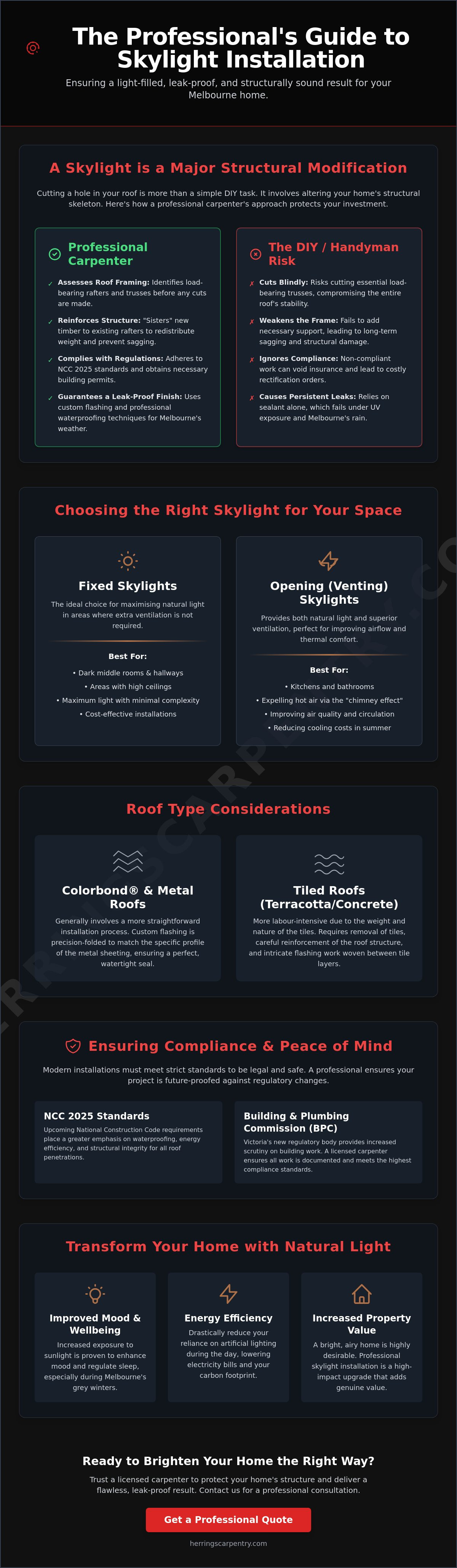
Cutting a hole in your home’s primary defence against the elements is a serious structural undertaking. Many people view a skylight as a simple plug and play product, but from a carpenter's point of view, it’s a major modification to your roof's skeleton. Whether your home has a Colorbond roof or traditional terracotta tiles, the weight of that material is supported by a carefully engineered system of rafters or trusses. A professional skylight installation Melbourne requires a deep understanding of these loads to ensure your roof doesn't sag or fail years down the track. We don't just look at where the light should go; we look at where the weight needs to be redistributed.
A licensed carpenter brings a level of precision that a general handyman simply can't match. We don't just cut through wood; we evaluate the entire span. If we are working with concrete or terracotta tiles, the structural requirements are even more stringent due to the sheer weight of the cladding. Tiled roofs typically involve more intensive labour to reinforce and flash correctly compared to metal sheeting. Under the new guidelines from the Building and Plumbing Commission (BPC) established in July 2026, there is a much higher level of scrutiny on structural compliance. If you are cutting a rafter or a truss, you need a building permit and a professional who knows how to maintain the home's integrity throughout the process.
Navigating Rafters and Trusses
Before any tools are lifted, we identify which members are load-bearing. In older Melbourne homes with stick-built roofs, we often perform "sistering." This involves bolting new timber alongside existing rafters to reinforce the opening and carry the extra weight. Modern homes often use pre-fabricated trusses, which are engineered as a single unit. You cannot simply cut a truss without a specific engineering plan, as it can compromise the entire roof's stability. We take the time to get this right before the first tile or sheet of metal is moved.
Framing the Internal Light Shaft
The job doesn't end at the roofline. We also have to construct the light shaft, or "well," that carries the light through your ceiling cavity. This structure must be perfectly plumb and square to look right from the living room below. We integrate this new frame with your existing ceiling joists, ensuring a seamless transition that doesn't create "dead spots" or insulation gaps. If you are looking to combine this with other upgrades, we often handle these structural details as part of our renovation support and fit-outs to keep the whole project under one professional eye.
Comparing Skylight Types: Finding the Right Fit for Your Roof
Choosing the right unit for your skylight installation Melbourne project depends on more than just the size of the hole in the roof. You need to consider the orientation of your home and how much heat you're willing to trade for light. A south-facing room might need a large, fixed unit to capture every bit of available brightness, whereas a north-facing kitchen could become an oven without the right glazing and ventilation. We look at the specific thermal needs of your space before recommending a product, ensuring the result is comfortable year-round.
Fixed skylights are the most straightforward and cost-effective option. They have no moving parts, which makes them incredibly reliable if your only goal is to brighten a dark hallway or a deep living area. However, if you're dealing with a room that gets stuffy, an opening skylight is the better path. Manual opening units work well for reachable ceilings, but for those high-pitched Victorian roofs, electric or solar-powered versions are the standard for 2026. Solar-powered units are particularly popular because they don't require an electrician to run cables through your rafters, simplifying the build and reducing the number of trades on site.
For homes with complex roof cavities where HVAC ducts or plumbing pipes block a traditional light shaft, sun tunnels are a practical alternative. These tubular devices use reflective piping to bounce light into internal rooms that would otherwise stay dark. They aren't as visually striking as a clear glass view of the clouds, but they solve "impossible" lighting problems in tight suburban blocks where a standard shaft won't fit.
Glass vs. Acrylic: What Works Best in Australia?
We've seen plenty of old acrylic domes that have turned brittle and yellow under the Australian sun. They're also noisy when it rains, which isn't ideal for a quiet home environment. For a professional skylight installation Melbourne, high-performance double glazing is the only way to go. Modern glass units, often featuring a Neat™ coating, use the sun's rays to loosen dirt so the rain can wash it away. This glass is toughened to meet AS 1288 standards, providing excellent hail resistance during those unpredictable spring storms that often catch Melbourne homeowners off guard.
Solar Tinting and Blinds
Direct sunlight is great for your mood, but it's tough on your floorboards and furniture. Low-E coatings and integrated blinds are essential for managing UV fading and heat gain. Honeycombed or block-out blinds can be solar-powered and operated via a remote or smartphone app. They allow you to control your light levels throughout the day, closing automatically during the hottest hours to keep your home cool without relying entirely on the air conditioner. This level of control protects your interior finishes and improves the overall energy efficiency of your home.
The Installation Journey: What to Expect During the Build
A successful skylight installation Melbourne project begins long before we climb onto your roof. It starts with a thorough site inspection where we map out the exact placement between your rafters. We aren't just looking for the best light; we're checking for plumbing stacks, electrical cables, and structural obstructions. Precision at this stage prevents surprises once the roof is open. Once we've confirmed the layout, we mark out the aperture and prepare the internal area with drop sheets to protect your floors and furniture from dust.
The "Roof Cut" is the most critical phase. For a Colorbond roof, we use specialised shears to create a clean, burr-free opening. For tiled roofs, we carefully remove and cut the terracotta or concrete tiles to fit the new frame. After the skylight unit is secured to the structural framing we discussed earlier, we install custom flashing. Generic kits often struggle with Melbourne’s heavy downpours, so we ensure the flashing is integrated perfectly with your specific roof profile. This creates a 100% watertight seal that directs water around the unit rather than letting it pool against the frame.
Managing the Melbourne Weather
We've all seen how quickly the sky can turn in Victoria. We plan every skylight installation Melbourne around the latest weather updates, but we always have a "plan B." During the construction phase, we use high-grade temporary waterproofing membranes to keep your home dry. Our rule is simple: we never leave a roof open overnight. Even if the forecast says it's clear, we ensure the unit is capped or the hole is professionally battened down before we leave the site. This discipline is what prevents the stress of unexpected leaks.
Plastering and Internal Fit-Out
While many installers leave you with a raw timber box, we focus on the final internal finish. The light shaft needs to look like it was always part of the house. This involves hanging plasterboard, setting the joints, and sanding them back to a smooth finish that matches your existing ceiling texture. We also prioritise quality insulation around the shaft to prevent heat transfer into the roof cavity. To finish the job properly, we can provide expert door and window installations or custom architraves to ensure the new feature blends seamlessly with your home's character. Whether you want a modern square-set look or traditional timber trim, the final coat of paint makes the transformation complete.
Ensuring a Leak-Proof Finish with Professional Melbourne Carpentry
The integrity of a skylight installation Melbourne wide depends entirely on how the unit meets the roof. While the glass and the frame are important, the flashing is what actually keeps the water out. Many DIY kits come with universal flashing that claims to fit any roof, but in reality, a one-size-fits-all approach often leads to failure. Melbourne’s seasonal storms can dump a significant amount of water in a short window. If your flashing isn't tailored to your specific roof profile, that water will eventually find its way into your ceiling cavity. We treat the waterproofing as a precision task, not an afterthought.
We often integrate these light-filled features into our deck and pergola packages Melbourne homeowners use to create versatile outdoor rooms. Adding a skylight to a covered pergola allows you to enjoy the shelter of a solid roof without losing the natural light in the adjacent indoor living areas. It's a practical solution that balances shade with brightness, ensuring your kitchen or lounge doesn't become a dark cave just because you've added an outdoor roof.
Custom Flashing for Melbourne Roofs
Colorbond roofs require a different approach than traditional terracotta or concrete tiles. With metal sheeting, we use custom-folded apron flashing that tucks deep under the ridge or the sheets above the unit to ensure water flows over the gap. On low-pitched roofs, we often implement back-flashing and high-quality neutral-cure sealants to prevent water from wicking back under the sheets. For tiled roofs, we ensure the soaker flashing is moulded perfectly to the tile contours. Keeping the area around the frame clear of leaves and debris is also vital for long-term performance. We recommend a quick check twice a year to ensure your gutters and skylight surrounds aren't holding onto wet leaf litter, which can cause corrosion or overflow issues over time.
Choosing a Licensed Carpenter
When you hire a professional for your skylight installation Melbourne project, you're paying for peace of mind and accountability. Always verify that your builder is licensed and carries the appropriate insurance for structural work. A no-nonsense carpenter won't cut corners on the structural framing or the waterproofing because they know the cost of a callback is far higher than the cost of doing it right the first time. With over 30 years of experience in the trade, we've seen every roof type and every potential pitfall. We value honesty and straightforward communication, ensuring you know exactly what the process involves from start to finish. If you're ready to brighten your home with a professional, leak-proof solution, get in touch to organise a site visit and a detailed quote.
Bring Lasting Light into Your Melbourne Home
Investing in a skylight is about more than just aesthetics; it's a structural commitment to your home’s future. By prioritising rafter integrity and professional flashing, you ensure that your new source of light doesn't become a source of worry. We have explored how modern glazing and proper ventilation can transform your living space while meeting the strict NCC 2025 standards. Getting the job done right requires a builder who understands the bones of your house and the nuances of local weather conditions.
With over 30 years of local experience, Shane is a fully licensed and insured Master Craftsman who specialises in complex structural roof modifications and framing. This expertise is your best insurance against the leaks and structural sagging that often plague amateur installs. If you're ready to brighten up those dark hallways or gloomy middle rooms, talk to Shane today about your Melbourne skylight installation. We will help you choose the right unit and ensure it is integrated perfectly into your roof for a lifetime of natural light. Let's get started on making your home feel bright and airy again.
Frequently Asked Questions
How much does skylight installation cost in Melbourne?
The cost of a skylight installation Melbourne project typically ranges from $900 for a basic tubular light to over $6,500 for high-end opening roof windows. These industry averages depend heavily on the type of unit, the complexity of your roof structure, and whether you have a metal or tiled roof. Tiled roofs generally require more labour for cutting and flashing, which can add a few hundred dollars to the total. We provide detailed quotes based on your specific framing and finishing requirements.
Do I need council approval for a skylight in Melbourne?
You will generally require a building permit in Victoria if the installation involves structural changes, such as cutting a roof rafter or a truss. If the unit fits between existing trusses without any modifications to the framing, a permit is often not required. Under the new regulations from the Building and Plumbing Commission (BPC) established in July 2026, it is vital to ensure all structural work is compliant. We always recommend checking with a building surveyor to confirm the requirements for your specific property.
Are skylights prone to leaking in heavy rain?
Skylights are not prone to leaking if they are installed correctly by a professional using custom flashing. Most issues with water ingress occur because of poor workmanship or the use of generic, one-size-fits-all kits that don't suit the specific roof profile. When integrated properly into your roof’s drainage system, a skylight is just as watertight as any other part of your home. Our focus on structural carpentry ensures the unit is sealed and flashed to withstand even the heaviest Victorian downpours.
Can you install a skylight on a flat roof?
Yes, skylights can be installed on flat roofs, but they require a specialised approach to ensure water doesn't pool around the frame. We typically build a small timber "kerb" or box at a slight angle to allow rain and debris to run off the glass naturally. This prevents the seals from sitting in standing water, which is the primary cause of leaks on low-pitched roofs. Using the right materials for a flat roof ensures the unit remains clear and watertight for years.
How long does the installation process usually take?
A standard skylight installation Melbourne wide usually takes between one and three days to complete. The structural work on the roof and the initial waterproofing are often finished within the first day to keep the home secure. The remaining time is spent on the internal fit-out, which includes constructing the light shaft, plastering, and sanding. If your project involves complex structural modifications or high-end internal finishes like custom architraves, it may take slightly longer to ensure a perfect result.
Will a skylight make my house too hot in the summer?
Modern skylights will not make your house too hot if you choose high-performance double glazing with Low-E coatings. These units are designed to block a significant amount of solar heat gain while still allowing visible light to flood the room. For added comfort during a Melbourne summer, you can opt for integrated solar-powered blinds. These allow you to control the light levels and heat entry with a remote or smartphone app, keeping your living area cool and comfortable year-round.
What is the difference between a roof window and a skylight?
The main difference is that a roof window is designed to be within reach and often opens like a standard window to provide both ventilation and a view. A skylight is typically installed higher up on the roof to provide light to the room below. While many modern skylights can also open, roof windows are generally built to a different standard that allows for easy cleaning from the inside. Both options provide excellent natural light, but the choice depends on your ceiling height and ventilation needs.
Can a skylight be installed on a heritage-listed home?
Installing a skylight on a heritage-listed home is possible, but it usually requires a planning permit from your local council. Heritage overlays often have strict rules about the placement of units, usually requiring that they are not visible from the street. You may also be required to use specific "conservation" styles that sit lower in the roofline to maintain the home’s original character. We have experience navigating these requirements to ensure your heritage property stays bright while remaining fully compliant with local heritage guidelines.


Comments